F
Field Ethos
Guest
By Tiffany McDuffie
There’s a particular confidence common among whiskey drinkers, the kind earned honestly through time spent learning its language: grain, proof, barrel, and aging technique. Spend enough evenings around enthusiasts and you’ll hear it eventually: “I don’t drink white wine.” I rarely hear it said with arrogance. More often, it comes from certainty.
Experience teaches us what we trust. Whiskey feels solid and provocative; its allure unquestionable. It demands attention, and the people drawn to it tend to value things that feel grounded and deliberate.
When I first ventured into wine, like many whiskey drinkers, I instinctively reached for reds. They offer depth and can hold their own beside deeply savory meals. White wine, by comparison, carried an unfair reputation in my mind: light, sweet, forgettable. Something cold handed across a summer table because it is light bodied and easy to drink. That assumption usually dissolves the moment the right glass is poured.
Over time, I have come to realize that whiskey and well-made white wine share far more common ground than most people expect. Both rely on balance. Both depend on viscosity as much as flavor. Both reveal character through layers of structure. The difference lies only in where that structure originates. In whiskey, it comes from mashbill and oak. In white wine, from acidity and minerality. Once I began looking for those parallels, the divide felt far less pronounced.
As warmer weather settles in, so does the desire for beverages with a lighter body. The following is not a rigid rulebook, but a guide for stepping confidently into the world of white wine.
If you are a wheated bourbon fan, think Maker’s Mark or Weller, you likely are not chasing intensity so much as a sweeter, more rounded mouthfeel. A wine like Apothic White meets that mindset in familiar territory, offering softness and gentle fruit that feels welcoming rather than challenging. It does not demand analysis. Almost like the golden retriever of white wines, it settles in quietly, carries a mellow finish, and remains extremely approachable.
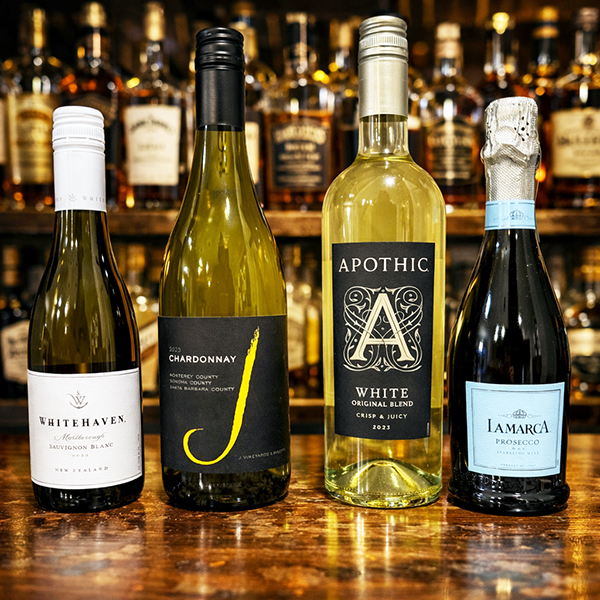
Those who gravitate toward a brand such as Elijah Craig understand what oak contributes: warmth, roundness, quiet complexity. J Vineyards Chardonnay speaks that same language. Subtle barrel influence brings baked apple, caramel, and vanilla, supported by a texture substantial enough to feel familiar without becoming heavy. For many whiskey drinkers, this could easily be a first white wine that stops feeling like a compromise and starts feeling like a discovery.
Rye drinkers and anyone drawn to higher proof respond differently. I have found that we appreciate complexity and a spirit’s ability to stay alive on the palate. Marlborough Sauvignon Blancs, such as Whitehaven, deliver that same sensation through acidity rather than alcohol. Citrus and fresh herbs cut cleanly across the tongue, bright and precise, waking the palate the way a barrel proof pour does. It leaves me intrigued and wanting another sip. Place this bottle among fellow rye drinkers and complaints are unlikely to follow.
Collectors approach things differently still. They linger, noticing subtle shifts as a glass opens. They understand and appreciate nuances. Massican’s Annia belongs firmly in this space. Inspired by northern Italian traditions rather than California excess, it layers citrus blossom, almond, and saline minerality into something thoughtful and restrained. This wine does not try to impress immediately; it rewards patience, much like a carefully chosen single barrel that reveals itself slowly over conversation.
Even the cocktail loyalist finds an easy entry point. La Marca Prosecco carries the same refreshing logic as a well-built whiskey cocktail: brightness, balance, and lift. Think of the effervescence like dilution and the citrus act’s similarly to bitters.
What I’ve come to realize is that most bourbon drinkers don’t actually dislike white wine, they’ve just been introduced to it the wrong way.
If you like oak, start with Chardonnay.
If you chase proof and edge, look at Sauvignon Blanc. If you enjoy nuance, find something mineral-driven and give it time. Approached this way, white wine does not replace whiskey for me; the landscape is simply expanded.
But not to worry. Whiskey will always come first.
The post Beyond the Barrel: A Whiskey Drinker’s Guide to White Wine appeared first on Field Ethos.
Continue reading...
There’s a particular confidence common among whiskey drinkers, the kind earned honestly through time spent learning its language: grain, proof, barrel, and aging technique. Spend enough evenings around enthusiasts and you’ll hear it eventually: “I don’t drink white wine.” I rarely hear it said with arrogance. More often, it comes from certainty.
Experience teaches us what we trust. Whiskey feels solid and provocative; its allure unquestionable. It demands attention, and the people drawn to it tend to value things that feel grounded and deliberate.
When I first ventured into wine, like many whiskey drinkers, I instinctively reached for reds. They offer depth and can hold their own beside deeply savory meals. White wine, by comparison, carried an unfair reputation in my mind: light, sweet, forgettable. Something cold handed across a summer table because it is light bodied and easy to drink. That assumption usually dissolves the moment the right glass is poured.
Over time, I have come to realize that whiskey and well-made white wine share far more common ground than most people expect. Both rely on balance. Both depend on viscosity as much as flavor. Both reveal character through layers of structure. The difference lies only in where that structure originates. In whiskey, it comes from mashbill and oak. In white wine, from acidity and minerality. Once I began looking for those parallels, the divide felt far less pronounced.
As warmer weather settles in, so does the desire for beverages with a lighter body. The following is not a rigid rulebook, but a guide for stepping confidently into the world of white wine.
A Whiskey Drinkers Guide to White Wine
If you are a wheated bourbon fan, think Maker’s Mark or Weller, you likely are not chasing intensity so much as a sweeter, more rounded mouthfeel. A wine like Apothic White meets that mindset in familiar territory, offering softness and gentle fruit that feels welcoming rather than challenging. It does not demand analysis. Almost like the golden retriever of white wines, it settles in quietly, carries a mellow finish, and remains extremely approachable.
Those who gravitate toward a brand such as Elijah Craig understand what oak contributes: warmth, roundness, quiet complexity. J Vineyards Chardonnay speaks that same language. Subtle barrel influence brings baked apple, caramel, and vanilla, supported by a texture substantial enough to feel familiar without becoming heavy. For many whiskey drinkers, this could easily be a first white wine that stops feeling like a compromise and starts feeling like a discovery.
Rye drinkers and anyone drawn to higher proof respond differently. I have found that we appreciate complexity and a spirit’s ability to stay alive on the palate. Marlborough Sauvignon Blancs, such as Whitehaven, deliver that same sensation through acidity rather than alcohol. Citrus and fresh herbs cut cleanly across the tongue, bright and precise, waking the palate the way a barrel proof pour does. It leaves me intrigued and wanting another sip. Place this bottle among fellow rye drinkers and complaints are unlikely to follow.
Collectors approach things differently still. They linger, noticing subtle shifts as a glass opens. They understand and appreciate nuances. Massican’s Annia belongs firmly in this space. Inspired by northern Italian traditions rather than California excess, it layers citrus blossom, almond, and saline minerality into something thoughtful and restrained. This wine does not try to impress immediately; it rewards patience, much like a carefully chosen single barrel that reveals itself slowly over conversation.
Even the cocktail loyalist finds an easy entry point. La Marca Prosecco carries the same refreshing logic as a well-built whiskey cocktail: brightness, balance, and lift. Think of the effervescence like dilution and the citrus act’s similarly to bitters.
Final Notes
What I’ve come to realize is that most bourbon drinkers don’t actually dislike white wine, they’ve just been introduced to it the wrong way.
If you like oak, start with Chardonnay.
If you chase proof and edge, look at Sauvignon Blanc. If you enjoy nuance, find something mineral-driven and give it time. Approached this way, white wine does not replace whiskey for me; the landscape is simply expanded.
But not to worry. Whiskey will always come first.
The post Beyond the Barrel: A Whiskey Drinker’s Guide to White Wine appeared first on Field Ethos.
Continue reading...


