F
Field Ethos
Guest
By Mike Schoby
I enjoy the planning part of an adventure nearly as much as actually embarking on it. But not all adventures are equal in terms of planning. Because the weather is consistent and mild I can pack for most African safaris in 30 minutes, but some adventures require much more thought. Take this spring for example. I’m heading to Alaska for brown bear. I’ve done this hunt before and know that packing the right gear is not only paramount to success and comfort, but in extreme cases, it could mean your very survival in this remote part of the world.
When planning a hunt into Alaska’s bush there is one truism: things can’t fail—if they do, it likely means the end of a very expensive hunt. So, pick a firearm system carefully. Honestly, the choice was relatively easy. I have a Blaser R8 that I trust. It has proven itself durable as well as accurate and reliable on multiple continents for more than a decade of use. In addition, I also appreciate the R8’s takedown nature for packing into small Alaskan bush planes. But two of my companions are bringing Gunwerks Endex rifles with the ingenious folding chassis system. Both are top tier choices when you have to absolutely count on a rifle.
The weakest link of any rifle is always the optics. And this is where the Blaser scope system shines. The QD scope mounting system on the R8 is integral to the barrel and is bomb proof as well as 100% repeatable, even if the scope is removed and replaced on the rifle. So, to adhere to the old adage of two is one, one is none motto, I am bringing two scopes (pre-sighted in) in Blaser QD mounts, plus I’ll throw in an Aimpoint Micro T2 on a Blaser saddle mount, just because I have it and it takes up no space in the gun case. Plus, if you have to follow a wounded brown bear into thick alders, a zero-magnification Aimpoint is the perfect tool for the job.
So what is the primary scope? With an eye on bomb proof, I selected the Blaser B2. To begin with, it is a robust scope at its very core, overbuilt to handle the rigors of the additional stress placed on a scope when clip-on night/thermal devises are used. Even though I obviously won’t be using any thermal devices, the added strength is never a bad thing. The main reason I selected it is as my primary optic is the integrated mounting system. Unlike traditional “American”-style scopes that utilize a base then a pair of rings (multiple potential failure points), the Blaser integrated rail system is machined into the scope, which the Blaser’s saddle mount directly integrates with three beefy Torx head screws securing it. Not only is this system arguably the toughest mounting system on the planet, but it also has other benefits. For starters, it is easy to adjust eye relief when mounting, and it eliminates the need for leveling as it is essentially perfectly level by design.
Blaser offers the B2 line of scopes in multiple magnifications, including a 2-12x, 2.5-15x, and 3-18x. I felt the 1.7-10x42mm is ideal for brown bear hunting. I will never need more than 10 power as the any guide worth his salt isn’t going to encourage true long-range shooting on a potentially dangerous game animal (nor do I want to shoot long range on brown bears, as I enjoy the up close and personal intimate experience), and I like the lower range of 1.7 in case of a charge when a wide field of view is a necessity.
The B2 also has a couple of additional features that make it appealing for a brown bear optic. It has a simple reticle with an illuminated red dot. It is easy enough to turn it on by pulling out the right-side knob (typically where the windage adjustment knob is found), then it can be rotated to adjust for dot intensity. However, if you are shooting a Blaser with the iC-equipped bolt, the scope will automatically turn on when you cock the Blaser—a nice integrated feature and eliminates one more thing to think about as well as serves as a visual reminder you are holding a cocked gun.
Elevation and windage adjustments are solid and positive, even if they are in metric (1 click is 1cm). Since I’m American and have no clue about the metric system except for limited college economics regarding buying grams, I just adjusted it until it was roughly 2 inches high at 100 yards. On my .375 H&H that puts it dead on at 200 yards for all practical purposes. And around 5 inches low at 250 yards—which I won’t shooting further.
With the scope decision settled, now it’s time to move on to the rest of my kit with as much care and deliberation. For Alaska is a harsh unforgiving bitch that doesn’t suffer unprepared fools.
Cost: $1,960.
Pros: Compact design, 6x zoom range, made in Germany.
Cons: Not commonly found at a dealer, but I did find them at Euro Optic.
The post Brown Bear Planning appeared first on Field Ethos.
Continue reading...
I enjoy the planning part of an adventure nearly as much as actually embarking on it. But not all adventures are equal in terms of planning. Because the weather is consistent and mild I can pack for most African safaris in 30 minutes, but some adventures require much more thought. Take this spring for example. I’m heading to Alaska for brown bear. I’ve done this hunt before and know that packing the right gear is not only paramount to success and comfort, but in extreme cases, it could mean your very survival in this remote part of the world.
When planning a hunt into Alaska’s bush there is one truism: things can’t fail—if they do, it likely means the end of a very expensive hunt. So, pick a firearm system carefully. Honestly, the choice was relatively easy. I have a Blaser R8 that I trust. It has proven itself durable as well as accurate and reliable on multiple continents for more than a decade of use. In addition, I also appreciate the R8’s takedown nature for packing into small Alaskan bush planes. But two of my companions are bringing Gunwerks Endex rifles with the ingenious folding chassis system. Both are top tier choices when you have to absolutely count on a rifle.
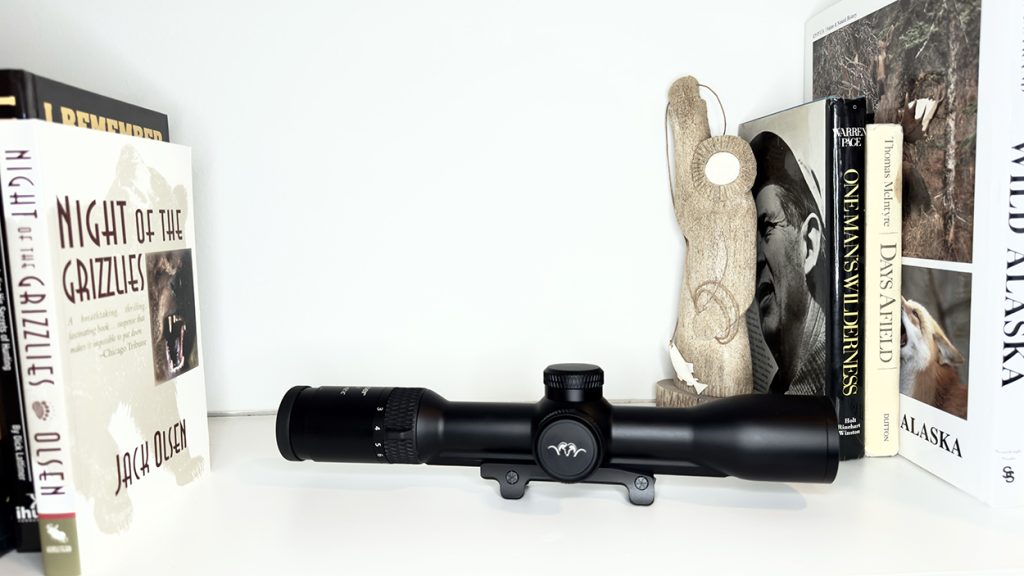
The weakest link of any rifle is always the optics. And this is where the Blaser scope system shines. The QD scope mounting system on the R8 is integral to the barrel and is bomb proof as well as 100% repeatable, even if the scope is removed and replaced on the rifle. So, to adhere to the old adage of two is one, one is none motto, I am bringing two scopes (pre-sighted in) in Blaser QD mounts, plus I’ll throw in an Aimpoint Micro T2 on a Blaser saddle mount, just because I have it and it takes up no space in the gun case. Plus, if you have to follow a wounded brown bear into thick alders, a zero-magnification Aimpoint is the perfect tool for the job.
Loaded for Bear With the Blaser B2
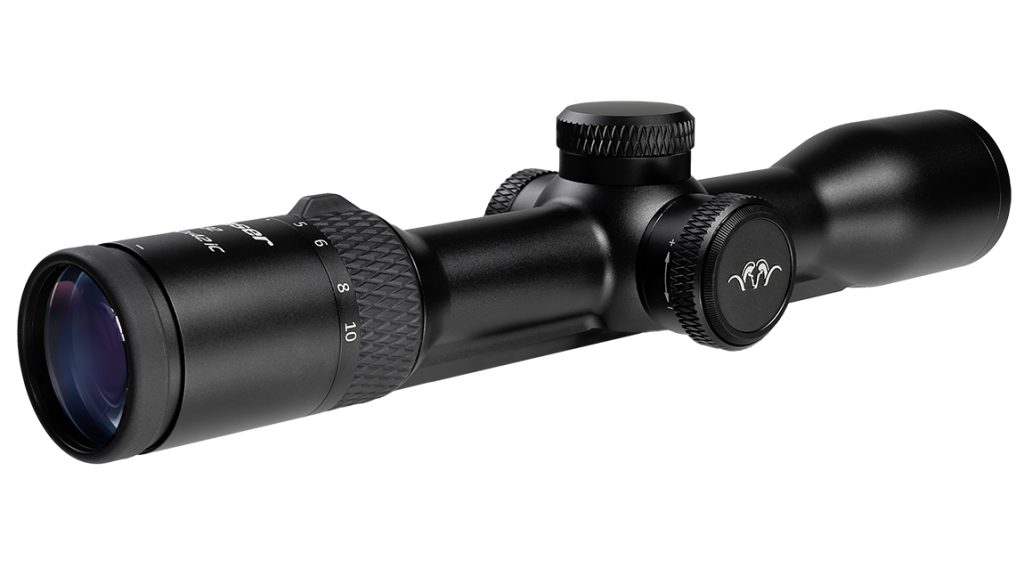
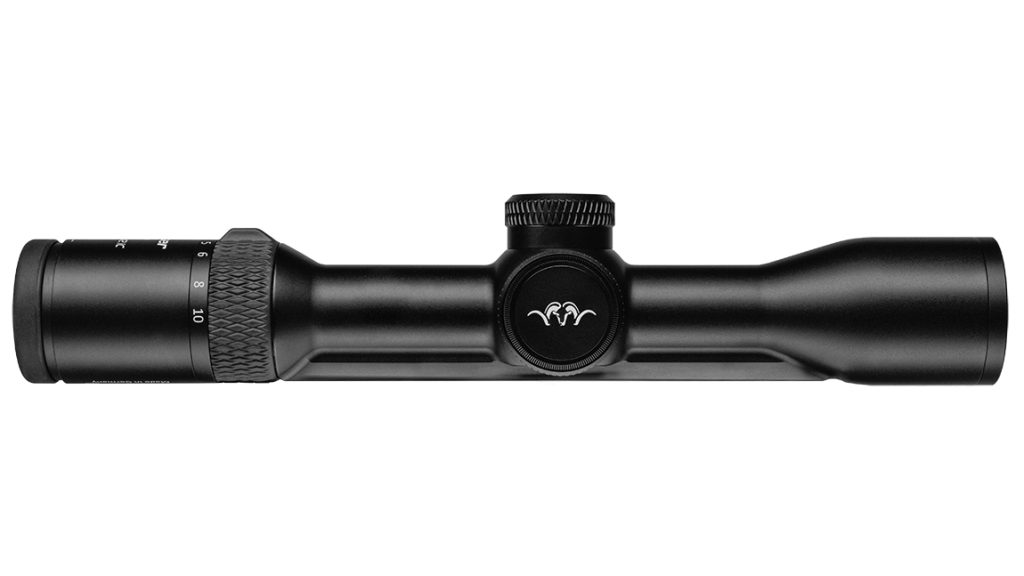
So what is the primary scope? With an eye on bomb proof, I selected the Blaser B2. To begin with, it is a robust scope at its very core, overbuilt to handle the rigors of the additional stress placed on a scope when clip-on night/thermal devises are used. Even though I obviously won’t be using any thermal devices, the added strength is never a bad thing. The main reason I selected it is as my primary optic is the integrated mounting system. Unlike traditional “American”-style scopes that utilize a base then a pair of rings (multiple potential failure points), the Blaser integrated rail system is machined into the scope, which the Blaser’s saddle mount directly integrates with three beefy Torx head screws securing it. Not only is this system arguably the toughest mounting system on the planet, but it also has other benefits. For starters, it is easy to adjust eye relief when mounting, and it eliminates the need for leveling as it is essentially perfectly level by design.
Blaser offers the B2 line of scopes in multiple magnifications, including a 2-12x, 2.5-15x, and 3-18x. I felt the 1.7-10x42mm is ideal for brown bear hunting. I will never need more than 10 power as the any guide worth his salt isn’t going to encourage true long-range shooting on a potentially dangerous game animal (nor do I want to shoot long range on brown bears, as I enjoy the up close and personal intimate experience), and I like the lower range of 1.7 in case of a charge when a wide field of view is a necessity.
The B2 also has a couple of additional features that make it appealing for a brown bear optic. It has a simple reticle with an illuminated red dot. It is easy enough to turn it on by pulling out the right-side knob (typically where the windage adjustment knob is found), then it can be rotated to adjust for dot intensity. However, if you are shooting a Blaser with the iC-equipped bolt, the scope will automatically turn on when you cock the Blaser—a nice integrated feature and eliminates one more thing to think about as well as serves as a visual reminder you are holding a cocked gun.
Elevation and windage adjustments are solid and positive, even if they are in metric (1 click is 1cm). Since I’m American and have no clue about the metric system except for limited college economics regarding buying grams, I just adjusted it until it was roughly 2 inches high at 100 yards. On my .375 H&H that puts it dead on at 200 yards for all practical purposes. And around 5 inches low at 250 yards—which I won’t shooting further.
The Bear Necessities
With the scope decision settled, now it’s time to move on to the rest of my kit with as much care and deliberation. For Alaska is a harsh unforgiving bitch that doesn’t suffer unprepared fools.
Cost: $1,960.
Pros: Compact design, 6x zoom range, made in Germany.
Cons: Not commonly found at a dealer, but I did find them at Euro Optic.
The post Brown Bear Planning appeared first on Field Ethos.
Continue reading...

