F
Field Ethos
Guest
By Caleb McClain
Back in high school, I had a wrestling and football coach who constantly said none of us would be able to beat him in Oklahoma drills or a bout on the mats because he was “old man tough.” I severely doubted his bold statement, given that he was only 5’ 6” and maybe weighed 160 pounds soaking wet. Moreover, I was confused as to how being old would be of any benefit in a test of physical strength.
While I am certainly not at an age that can be qualified as old myself, as the pages of the calendar are torn away, I am beginning to understand what he meant. Age breeds experience, specifically the experience of handling difficult circumstances, and while the body may be weaker, you are left with a more resilient spirit that cannot be as easily crushed.
Such was the case with my gray-haired coach (who, might I add, pinned even our best wrestlers every time they faced him), and such was the case of Captain Samuel Whittemore.
Samuel Whittemore was born in 1696 in a suburb of Boston. A farmer by trade, Whittemore settled peacefully, working the land in an entirely unremarkable manner until duty called.
Despite his 50th birthday being on the horizon, Whittemore enlisted in the 3rd Massachusetts Regiment as the first shots were fired in King George’s War. He was involved in the surrender of the French Fortress of Louisburg in Nova Scotia, where he captured a French officer and kept his sword as a souvenir. He returned to his farm with the signing of Treaty of Aix-la-Chapelle, although some records suggest he went on to fight in the French and Indian War at the age of 60.
His peaceful life soon became political. As the colonists grew enraged over the various taxes that led to the American Revolution, Whittemore, a now respected elder in his community, was elected to serve the town of Cambridge in various committees directly opposing the Crown. A line was drawn in the sand, and he gladly chose his side: Liberty or Death.
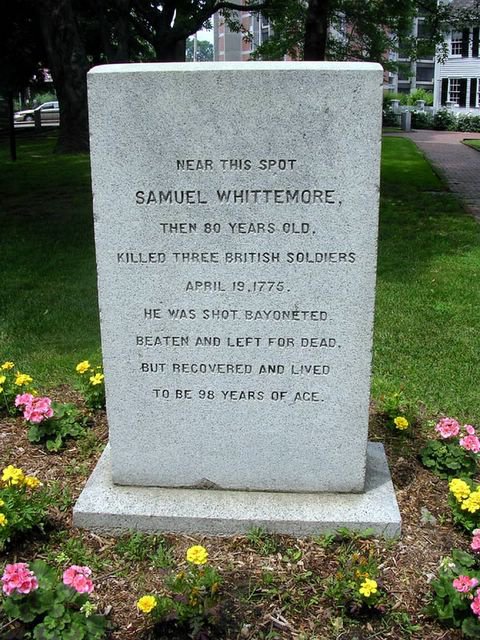
At sunrise on the morning of April 19, 1775, shots echoed the cries of revolution through the air at Lexington and Concord. Militiamen and farmers swarmed the region, attacking the British soldiers as they marched back to Boston. Whittemore, now 78, grabbed his musket, two dueling pistols, and the French officer’s sword he had taken 30 years prior. Staging himself behind a stone wall to ambush the Redcoats, Whittemore drew his musket as they passed, fired, and dropped a British soldier, an act making him the oldest soldier to serve in the American Revolution. He then pulled his pistols and shot two more soldiers before taking a shot to the face himself. Despite the pain, he drew his prized sword and engaged in close-quarters combat, eventually being bayonetted at least six times, beat with rifle stocks, and left for dead.
Proving that he too was “old man tough,” Whittemore refused to die. Instead, he was found hours later reloading his guns to hopefully take one more with him before he slipped into eternal rest. The townspeople carried him on a door to a local tavern where the doctor initially refused to work on Whittemore, claiming the wounds were certainly fatal. After eventually receiving the necessary medical care, Whittemore returned to the farm to live another 18 years. In 2005, the Massachusetts Legislature honored this act of courage by declaring him the official state hero.
So, my friends, as one year ends and another begins, may we all age with the growing resilience of Samuel Whittemore.
The post Beware the Old Man appeared first on Field Ethos.
Continue reading...
Back in high school, I had a wrestling and football coach who constantly said none of us would be able to beat him in Oklahoma drills or a bout on the mats because he was “old man tough.” I severely doubted his bold statement, given that he was only 5’ 6” and maybe weighed 160 pounds soaking wet. Moreover, I was confused as to how being old would be of any benefit in a test of physical strength.
While I am certainly not at an age that can be qualified as old myself, as the pages of the calendar are torn away, I am beginning to understand what he meant. Age breeds experience, specifically the experience of handling difficult circumstances, and while the body may be weaker, you are left with a more resilient spirit that cannot be as easily crushed.
Such was the case with my gray-haired coach (who, might I add, pinned even our best wrestlers every time they faced him), and such was the case of Captain Samuel Whittemore.
OG Old Man Strong
Samuel Whittemore was born in 1696 in a suburb of Boston. A farmer by trade, Whittemore settled peacefully, working the land in an entirely unremarkable manner until duty called.
Despite his 50th birthday being on the horizon, Whittemore enlisted in the 3rd Massachusetts Regiment as the first shots were fired in King George’s War. He was involved in the surrender of the French Fortress of Louisburg in Nova Scotia, where he captured a French officer and kept his sword as a souvenir. He returned to his farm with the signing of Treaty of Aix-la-Chapelle, although some records suggest he went on to fight in the French and Indian War at the age of 60.
His peaceful life soon became political. As the colonists grew enraged over the various taxes that led to the American Revolution, Whittemore, a now respected elder in his community, was elected to serve the town of Cambridge in various committees directly opposing the Crown. A line was drawn in the sand, and he gladly chose his side: Liberty or Death.
Can’t Kill an Old Killer
At sunrise on the morning of April 19, 1775, shots echoed the cries of revolution through the air at Lexington and Concord. Militiamen and farmers swarmed the region, attacking the British soldiers as they marched back to Boston. Whittemore, now 78, grabbed his musket, two dueling pistols, and the French officer’s sword he had taken 30 years prior. Staging himself behind a stone wall to ambush the Redcoats, Whittemore drew his musket as they passed, fired, and dropped a British soldier, an act making him the oldest soldier to serve in the American Revolution. He then pulled his pistols and shot two more soldiers before taking a shot to the face himself. Despite the pain, he drew his prized sword and engaged in close-quarters combat, eventually being bayonetted at least six times, beat with rifle stocks, and left for dead.
Proving that he too was “old man tough,” Whittemore refused to die. Instead, he was found hours later reloading his guns to hopefully take one more with him before he slipped into eternal rest. The townspeople carried him on a door to a local tavern where the doctor initially refused to work on Whittemore, claiming the wounds were certainly fatal. After eventually receiving the necessary medical care, Whittemore returned to the farm to live another 18 years. In 2005, the Massachusetts Legislature honored this act of courage by declaring him the official state hero.
So, my friends, as one year ends and another begins, may we all age with the growing resilience of Samuel Whittemore.
The post Beware the Old Man appeared first on Field Ethos.
Continue reading...

