Custom Bolt Gun Build With Photos

  • Join our community of outdoor enthusiasts! Subscribe to Field Ethos Magazine to unlock full forum access and connect with fellow adventurers sharing their stories, tips, and experiences.

    If you are already a subscriber, log in here.

Keith Wood

Well-known member
I’ve always enjoyed making things, tweaking things, and, yes, breaking things. As I kid in Miami, I watched a tool and die maker ply his trade, making parts for aircraft and go-fast boats designed to outrun the Feds. All I could think of was how his skill and tooling could be used to make guns.

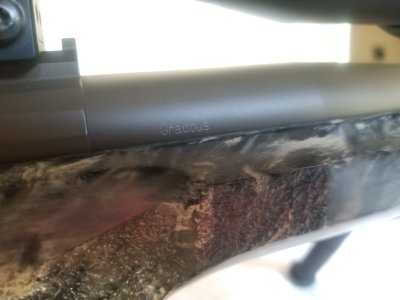
A few decades later, I bought a lathe and a milling machine. And then a surface grinder, and then another lathe. I learned the basics from a lunatic genius name Robert Gradous and the finer points by D’Arcy Echols, one of the greatest gunmakers alive.

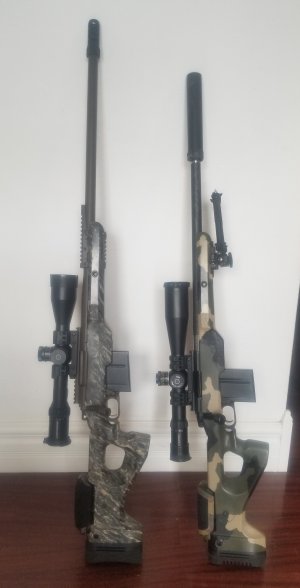
This project was sort of the result of leftovers. I had an orphan Defiance Tenacity action and a Pure Precision stock that was sent to someone as a sample that was never used. I kicked the tires on a few ideas before landing on a 6mm Creedmoor that I could use as a do-it-all rifle around the farm. Shooting steel, deer, hogs and the occasional coyote.

I ordered a cut-rifled barrel blank and waited. Life got busy and the parts collected dust until I finally locked the door, turned off the phone and started making chips.

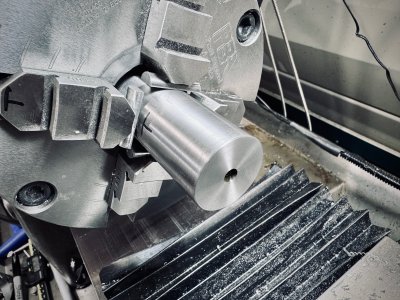
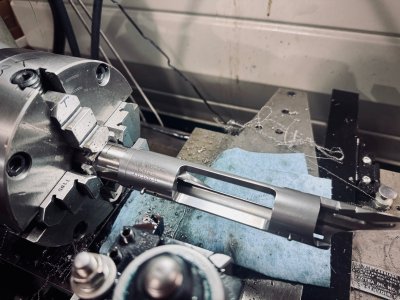
Even the best barrels are far from straight—the key is to start the bullet on its path so that it engraves into the leade of the bore as directly as possible. Using a four-jaw chuck fit with a set of gimbals, I use a piloted indicator rod to align the bore with the lathe’s spindle over the length of the chamber. I don’t care if the muzzle is flapping in the breeze so long as the first 3” or so are running within .0001”. Running the rod into and out of the bore with the indicator measuring runout allows for establishing coaxial alignment. It takes a while, but it's worth it.
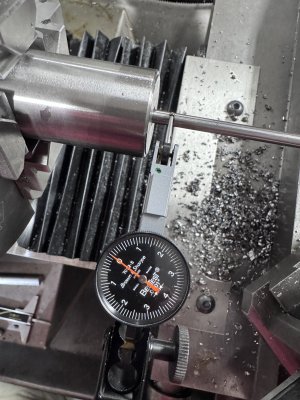
IMG_7007.JPG
IMG_7010.jpg
 
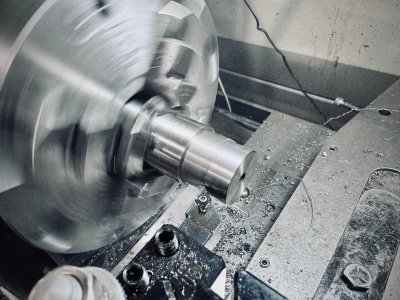
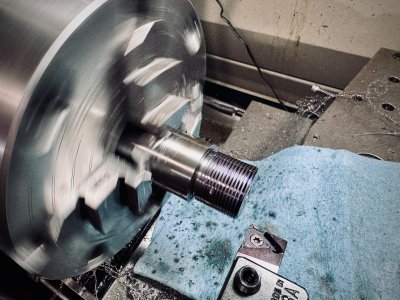
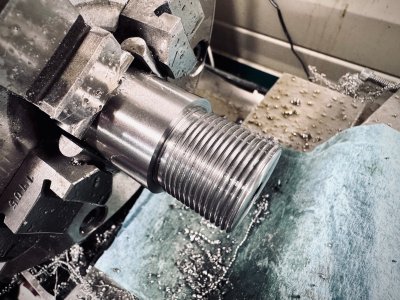
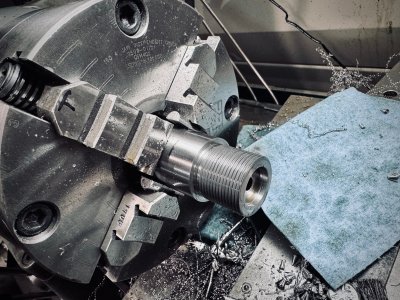
Threading is the tricky part, but my Hardinge HLV-H lathe makes threading incredibly simple as compared to other lathes. I’m aiming for as good a fit as I can get, making .001” passes at the end of the process. Once the action slips up onto the tenon, you’re good to go.
IMG_7019.jpg
IMG_7023.jpg
IMG_7020.jpg
 
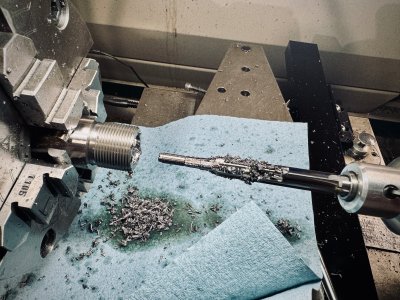
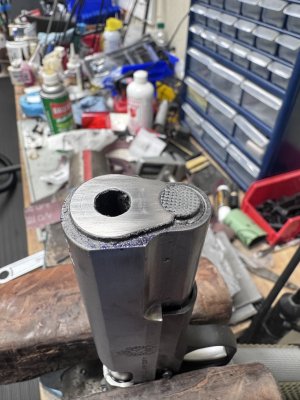
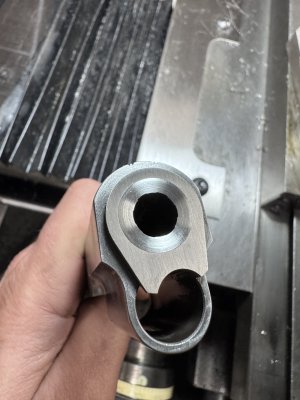
700-style actions require a counterbore cut for the bolt nose. This can be done with a boring bar, but I used a piloted tool made by Manson Reamers.
IMG_7026.jpg
Cutting the chamber to the correct headspace is next. I didn’t take any photos this time around, but this one will give you the idea.
IMG_2913.jpg
 
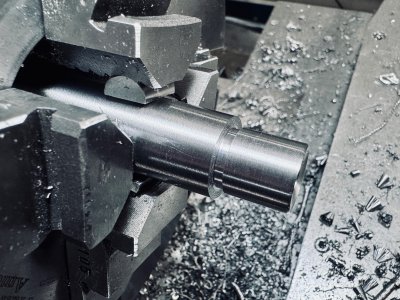
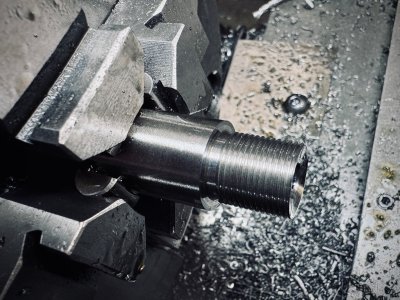
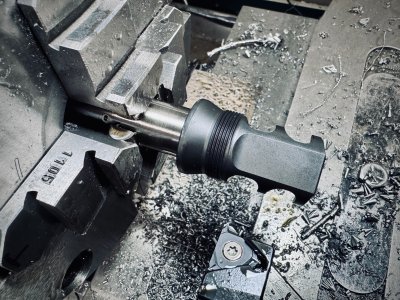
That’s pretty much it for the breech end. Now we flip the barrel around and dial in the muzzle to ensure alignment. On this rifle, I cut the barrel back to 18” and cut a thread tenon. At this contour, I didn’t feel that 5/8-24 threads would have provided enough shoulder to properly index a suppressor, so I went with 9/16-24. I don’t have a suppressor with that thread pattern so I used a Thunder Beast Arms CB brake that will provide the proper mounting solution.
IMG_7492.jpg

IMG_7497.jpg
IMG_7495.jpg
Next time, we will make aluminum pillars and prepare to bed the stock.
 
Holy wow, thanks for bring it to us! That's awesome! What is the rifling you've chosen and the twist rate best for the 6mm Creedmoor?
 
Just tagging along here on this thread is bitchin'! I've done a very small amount of lathe & mill work in the past, but nothing like this or what the photos show. Looking forward to the progression of this build and the results of the efforts.
 
Holy wow, thanks for bring it to us! That's awesome! What is the rifling you've chosen and the twist rate best for the 6mm Creedmoor?
Appreciate all of the comments-- I'll keep the photos coming.

The barrel is from K&P in South Dakota. From memory, I believe it is their #4 contour and is a 1:7.5' twist. The barrel contour was chosen to get the wall thickness that I wanted at the finished length. Weight isn't going to be a huge concern on this rifle-- we are short on mountains around here.
 
Onto the stock. Pillars are often mentioned, rarely considered. Simply putting pillars into a stock is worthless if they’re not fit correctly. Think of them like columns supporting a building. I see them on factory guns where they don’t even touch the action.

The stock I’m working with came with pillars, but I drilled them out on the mill and started over. I make them out of 7075 aluminum but the material isn’t crucial. They could be steel if you wanted to add weight and a friend uses G-10. Anything that will withstand the action screw torque is fine.

I make mine so that the rear pillar’s outside diameter (OD) is relatively tight to the inlet on the stock. The front pillar is smaller, allowing us some float as we align the barrel with the stock’s barrel channel inlet.

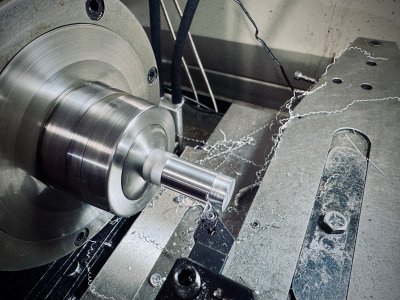
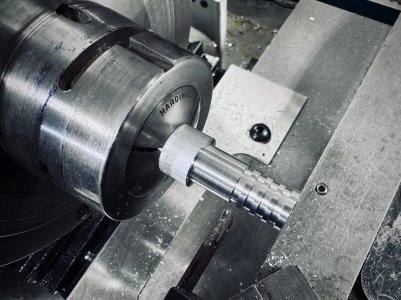
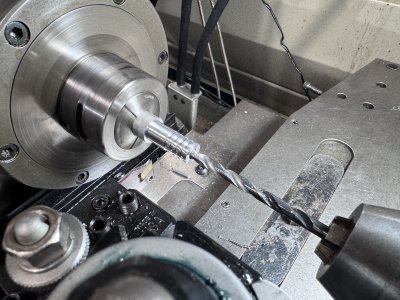
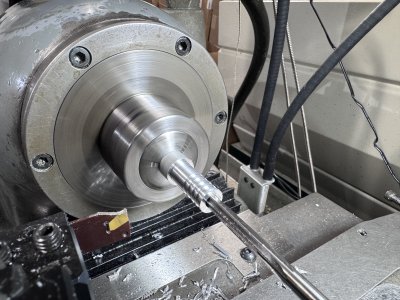
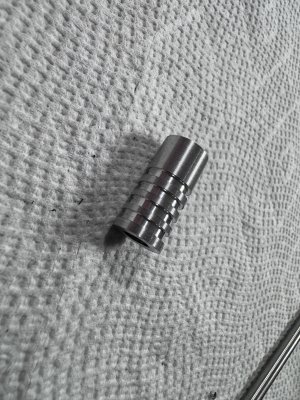
I turned this pillar down to size and used a parting tool to cut several grooves that will create a mechanical lock when the epoxy is applied.
IMG_7503.jpg

IMG_7523.jpg
Initially, I want the inside of the pillar to be a slip fit with the action screw. Using a center drill, then an undersized drill bit and, finally, a chucking reamer, I cut the pillar’s ID to right at .250”.
IMG_7557.JPGIMG_7558.JPGIMG_7560.JPG
 
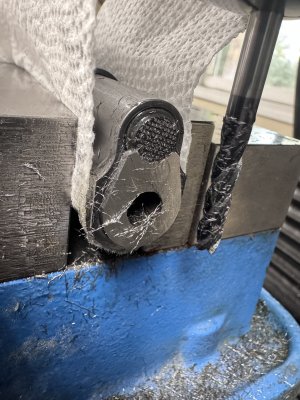
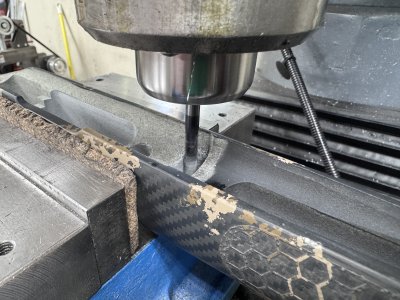
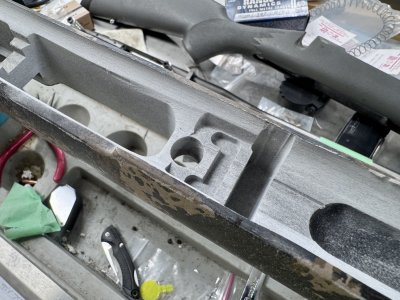
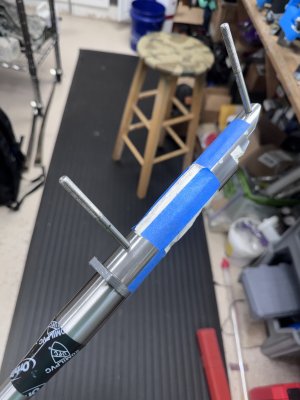
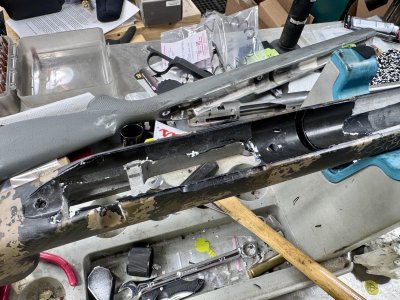
I set the pillars in one operation, using inletting black to ensure that the barreled action isn’t touching the stock anywhere than at the tang—the barrel is supported by tape at its half-depth in the barrel channel. Using the mill, I cut away material to allow the action to float and to provide room for the bedding material.
IMG_7583.JPG
IMG_7577.JPG
IMG_7586.jpgIMG_7577.JPGIMG_7586.jpgIMG_7583.JPG
After setting the pillars, I realized that I had a problem. This stock was originally inletted for a BDL-style magazine, but the action was cut for a DBM. I sent it off to be recut for an M5 inlet using a CNC. Only after installing the pillars, did I realize that the inlet was cut off-center. After all of the trouble that I went to create minimum dimensions with the pillars, I had to ream them out to allow for the crooked inlet. This is the type of Mickey Mouse BS that forced me to start building my own guns in the first place.
 
IMG_7616.JPG
The pretty bedding jobs that you see photos of don’t start out that way. Like a newborn baby, it’s best to clean things up before you start snapping photos.
IMG_7622.jpg
IMG_7638.JPG
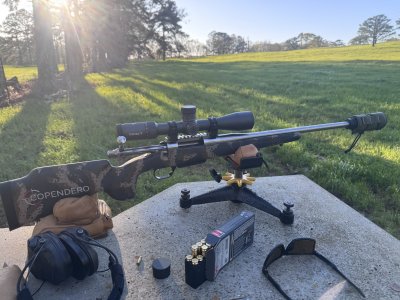
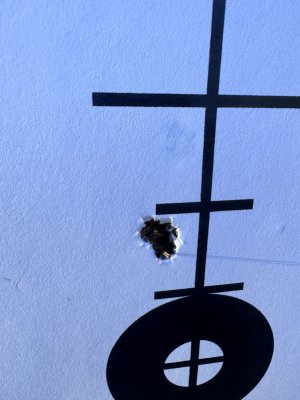
Before I put too much more time into it, it was time to shoot it. I bolted everything together and shot a few groups to make sure that I wasn’t wasting my time. They all looked about like this.
IMG_7641.jpgIMG_7616.JPGIMG_7622.jpgIMG_7638.JPGIMG_7641.jpg
 
I set the pillars in one operation, using inletting black to ensure that the barreled action isn’t touching the stock anywhere than at the tang—the barrel is supported by tape at its half-depth in the barrel channel. Using the mill, I cut away material to allow the action to float and to provide room for the bedding material.
View attachment 4062
View attachment 4063
View attachment 4064View attachment 4063View attachment 4064View attachment 4062
After setting the pillars, I realized that I had a problem. This stock was originally inletted for a BDL-style magazine, but the action was cut for a DBM. I sent it off to be recut for an M5 inlet using a CNC. Only after installing the pillars, did I realize that the inlet was cut off-center. After all of the trouble that I went to create minimum dimensions with the pillars, I had to ream them out to allow for the crooked inlet. This is the type of Mickey Mouse BS that forced me to start building my own guns in the first place.
No plan survives contact. Digging the attention to detail.

//L
 
Back
Top