F
Field Ethos
Guest
By Byron Harvison
I am not good at climbing.
But I fucking love it.
I love the way it asks you to trust something before it earns that trust. You step upward without knowing if the line will go, without knowing if the rock will hold, only believing—foolishly, maybe—that you will come back in one piece. Climbing leads you into places most people never see, places that feel unfinished, as if the world paused before deciding what they were for.
I don’t have many first ascents. My adult life ran in other directions—years spent burning time and taxpayer money in the Middle East with the Army, followed by the slower, weightier work of being a husband and a father of four. Those years teach you about responsibility. They also teach you how little room there is for wandering.
Still, the few first ascents I’ve managed feel like small, stubborn acts of defiance.
One came in early September, before dawn, in the Uintas with my friend Madison. He had told me about unclimbed lines above Lake Ibantik, about rock that had been passed over or forgotten. We started in the dark. When the light finally came, the lake lay perfectly still below us, a flawless mirror holding the mountains in place. No wind. No voices. No one else in the world, it seemed, who knew we were there.
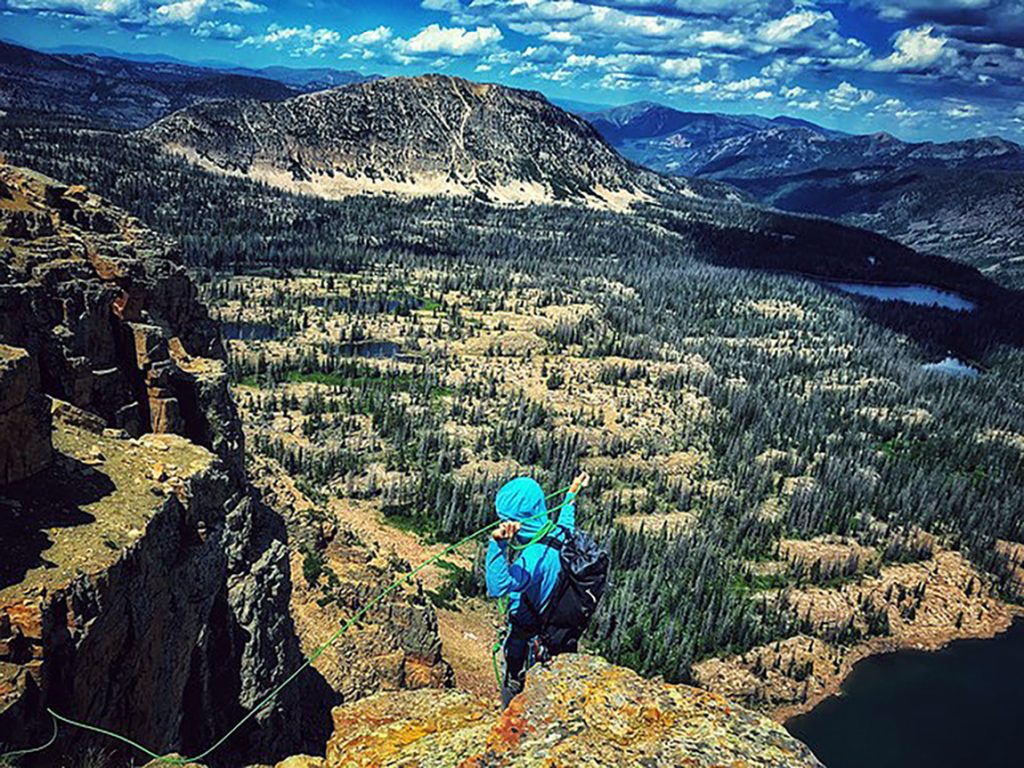
The rock changed its mind constantly. Some of it was solid and reassuring; some of it was choss, barely held together by moss and hope. Madison moved ahead with a steady, metronomic calm, never rushing, never hesitating. I followed, my hands obeying while my thoughts scattered. Fear stayed with me the entire way—not loud enough to stop me, just enough to remind me that this mattered.
When we topped out, I felt the quiet weight of being first. The first to touch those holds with intention. The first to believe that this unlikely path was a line at all. It wasn’t conquest. It was permission.
Years later, that same feeling returned in a different place, on different rock.
My son and I stood at the base of a small cliff in eastern Arkansas, looking up at something modest and unnamed. It was nothing like the Uintas—no alpine silence—but the uncertainty was the same. We didn’t know if the line would work. We didn’t know what would come next. I watched him study the rock the way I once had, tentative but curious, trying to imagine movement where none yet existed.
We climbed slowly. I stayed close, offering advice when asked, quiet when not. I felt a familiar tension in my chest, the same one I’d felt following Madison—except now it wasn’t my own fall I imagined. It was my son’s. The fear had changed shape, but not substance.
When we finished, there was no summit worth mentioning. No sweeping view. Just the small satisfaction of having gone where we hadn’t been before, together. Of having trusted the rock, and each other, enough to try.
That’s when I understood that first ascents aren’t always about untouched stone. Sometimes they are about showing someone how to stand in uncertainty without turning away from it. Sometimes they are about teaching a boy that fear doesn’t mean stop—it means pay attention.
I am still not good at climbing.
But I keep choosing it.
And now, I am teaching my son how to choose it too. And I fucking love it.
The post First Ascending appeared first on Field Ethos.
Continue reading...
I am not good at climbing.
But I fucking love it.
I love the way it asks you to trust something before it earns that trust. You step upward without knowing if the line will go, without knowing if the rock will hold, only believing—foolishly, maybe—that you will come back in one piece. Climbing leads you into places most people never see, places that feel unfinished, as if the world paused before deciding what they were for.
I don’t have many first ascents. My adult life ran in other directions—years spent burning time and taxpayer money in the Middle East with the Army, followed by the slower, weightier work of being a husband and a father of four. Those years teach you about responsibility. They also teach you how little room there is for wandering.
Still, the few first ascents I’ve managed feel like small, stubborn acts of defiance.
To Climb Into the Unknown
One came in early September, before dawn, in the Uintas with my friend Madison. He had told me about unclimbed lines above Lake Ibantik, about rock that had been passed over or forgotten. We started in the dark. When the light finally came, the lake lay perfectly still below us, a flawless mirror holding the mountains in place. No wind. No voices. No one else in the world, it seemed, who knew we were there.
The rock changed its mind constantly. Some of it was solid and reassuring; some of it was choss, barely held together by moss and hope. Madison moved ahead with a steady, metronomic calm, never rushing, never hesitating. I followed, my hands obeying while my thoughts scattered. Fear stayed with me the entire way—not loud enough to stop me, just enough to remind me that this mattered.
When we topped out, I felt the quiet weight of being first. The first to touch those holds with intention. The first to believe that this unlikely path was a line at all. It wasn’t conquest. It was permission.
Years later, that same feeling returned in a different place, on different rock.
The Power of First Ascending
My son and I stood at the base of a small cliff in eastern Arkansas, looking up at something modest and unnamed. It was nothing like the Uintas—no alpine silence—but the uncertainty was the same. We didn’t know if the line would work. We didn’t know what would come next. I watched him study the rock the way I once had, tentative but curious, trying to imagine movement where none yet existed.
We climbed slowly. I stayed close, offering advice when asked, quiet when not. I felt a familiar tension in my chest, the same one I’d felt following Madison—except now it wasn’t my own fall I imagined. It was my son’s. The fear had changed shape, but not substance.
When we finished, there was no summit worth mentioning. No sweeping view. Just the small satisfaction of having gone where we hadn’t been before, together. Of having trusted the rock, and each other, enough to try.
That’s when I understood that first ascents aren’t always about untouched stone. Sometimes they are about showing someone how to stand in uncertainty without turning away from it. Sometimes they are about teaching a boy that fear doesn’t mean stop—it means pay attention.
I am still not good at climbing.
But I keep choosing it.
And now, I am teaching my son how to choose it too. And I fucking love it.
The post First Ascending appeared first on Field Ethos.
Continue reading...
