F
Field Ethos
Guest
By Scott Longman
In March of this year, a U.S. Los Angeles-class submarine, the U.S.S. Charlotte, torpedoed and sank an Iranian frigate, the IRIS Dena. The attack was notable for a number of reasons, including that it was the first time that a U.S. sub had torpedoed and sunk anything but a sailor’s hope of shore leave since WWII. But in those intervening decades, a couple of other nations have dispensed with some Torpex-based hate and discontent, with the last such being in 1982. In the Falklands War, the Brits sunk an Argentinian light cruiser. And it happened like this.
The Argies had claimed a territorial right to the Falkland Islands, about 400 miles off their coast in the South Atlantic, and rolled up the beach in April of 1982. Well, the UK’s Prime Minister, Margaret “The Iron Lady” Thatcher, was having none of it. Polymarket wasn’t a thing then, but had it been, it would have been lonely on this one. Despite those type of naysayers, Maggie stiffened her upper lip and sent it anyway, packing off a task force to travel 8,000 miles.
Among the flotilla she launched were five nuclear-propelled attack submarines, including the H.M.S. Conqueror, helmed by Commander Chris W. Brown. All the subs’ missions were to gather intelligence and, if necessary, act to protect the surface ships. Critical to that protection mission was that the Brits had unilaterally declared a “Total Exclusion Zone” of 200 miles around the islands and announced that it would be a turkey shoot for anything in there scarier than a Hobie Cat.
As the British force was approaching from the eastern side of the islands, the Argentinians began a naval pinchers movement, with two elements starting to come down from the north, and another rising up from the south. Ironically, the Argie forces had predominantly British and American ships: their only carrier had started life with an “H.M.S.” prefix, as had two of their destroyers. And coming up from the south were a couple of formerly American destroyers, escorting the light cruiser, the General Belgrano.
The General Belgrano, too, was once American, having started life as the U.S.S. Phoenix. The ship had seen its first combat on Day One of WWII, at Pearl Harbor, where she fired upon Japanese planes, and then tried to find their carriers after the attack. She went on to a full and distinguished war of service, ultimately being sold in 1951 to Argentina.
“Obsolete” should never detract from “still highly lethal.” The ARA General Belgrano (“ARA” stands for “Armada de la República Argentina”) sported a main armament of five turrets of three six-inch guns each. Their combined rate of fire was 150 rounds a minute, which could rain an absolute hell of 100-pound shells out to 14 miles. While that couldn’t match the then-modern anti-ship missiles, it was still magnificently destructive, and further yet, the ship’s escort destroyers also had modern French Exocets, which were an even bigger threat.
Well, the Argies had to stand down on their pinscher maneuver for a wonderfully ironic reason. Their sole carrier only had planes that could launch into a headwind, but no such wind was to be had, and they’d earlier taken a pass on buying planes that didn’t need a headwind—the British Sea Harrier. So, without British planes that they didn’t have, launching from a British carrier, with British destroyers protecting them, they couldn’t attack the British.
At that time, in bad seas and foggy conditions, Commander Brown spotted the ship. The problem was that the Argies had intentionally stayed outside the Brit’s Total Exclusion Zone, so the ship was outside the Rules of Engagement. Yes, a pragmatist would ask “Um, excuse me, isn’t this supposed to be, oh, say, a war, where you destroy the enemy and win?” But for anybody who’s ever suffered under an ROE, they had to. So … Captain Brown had to ask Mother-May-I from 8,000 miles away, all while with a fleeting target. Can you imagine explaining even the concept of that procedure to a Viking? Or to William Tecumseh Sherman?
Anyway, his request vertically pachinko’d all the way up the command structure, ultimately causing a convocation of the War Cabinet, to include The Iron Lady her own self. While pop culture portrays her as ultimately giving the glaring ultimatum to “Sink It!,” historians unconcerned about Rotten Tomatoes scores say she didn’t actually say that, although the outcome was the same either way.
Commander Brown closed the distance to maritime equivalent of “Report this contact to HR”—about 1,700 yards—refined his firing solutions, and cut loose.
The weapons he’d selected might seem counter intuitive. His sub was equipped with both then-modern Mark 24 torpedoes with self-guidance, and also WWII-era Mark 8s. He chose the latter, reportedly because he didn’t trust the new tech, and he knew that the massive 800-plus-pound payload on the latter had been designed to punch through just the kind of WWII main belt armor that the target had.
To borrow from Mr. Clean in “Apocalypse Now”: “[Argies] don’t never see ‘em or hear ‘em, man.” And they didn’t. Total blindside.
The first blast was in the stern, in the area of the engine room. That load of Torpex blew through the hull and instantly destroyed the main electrical power and the backup generator. That meant no pumps, no lights, no reasonable chance of damage control, and no radio for a distress call. Adding to that, it blew a 20-yard hole all the way up through the deck while also starting an inferno. That hit alone would almost certainly have been all there was to say.
But an instant later, the second fish hit in front of the front turret. Hard to believe, but it blasted the entire bow clean off.
The third torpedo of the triple-fan just missed and went on to detonate near one of the escort destroyers without meaningful effect.
All of this was a victory. But, in fairness to the Argentinian sailors, it was also a profound tragedy. The ship went down quickly. Because there had been no distress call, and the bad weather shrouded any eyes-on, the destroyer escorts did not immediately understand what had happened. In horrible toll, 323 mostly young sailors lost their lives. Horrible, but war.
The sinking did achieve Britain’s objectives: all but one ship of the Argentine navy thereafter wisely skyed out for the safety of the mainland and didn’t come back for the duration. That then gave the Brit task force the margin to redirect its subs to instead monitor mainland air bases to provide early warning of incoming planes, which in turn allowed Maggie’s Boys to develop the air superiority necessary to support the conclusive amphibious invasion that followed.
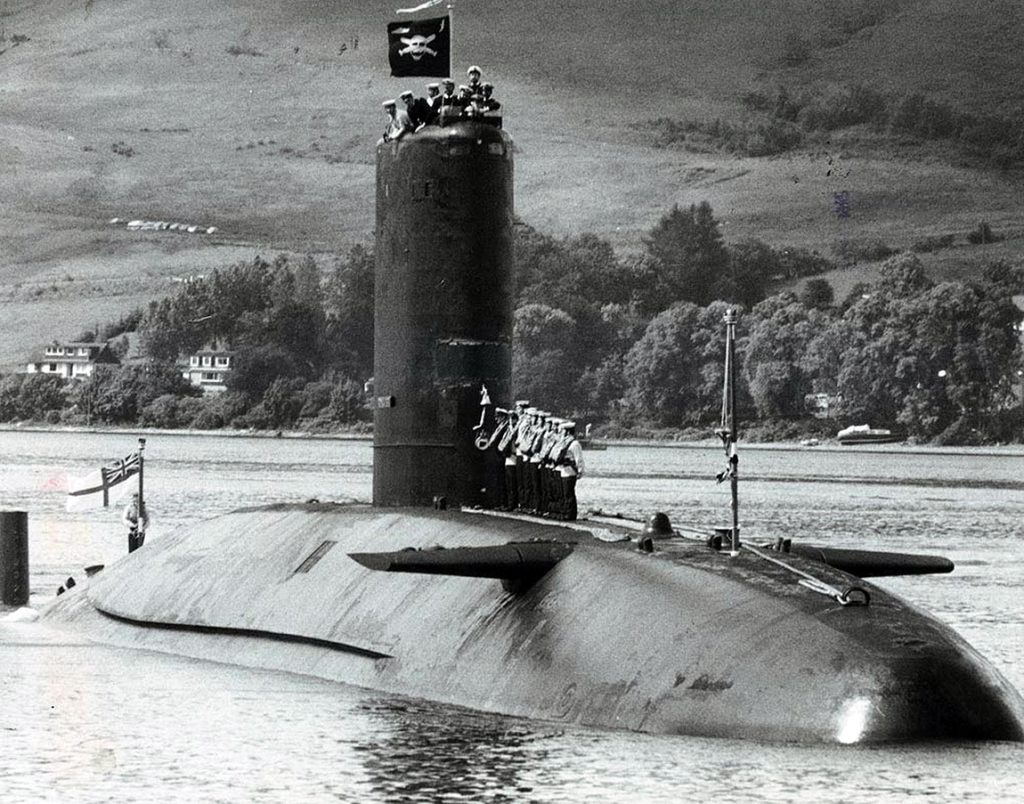
To truncate a whole lot more story, the Argentinians surrendered, and the H.M.S. Conqueror returned to its base in Clyde, flying a custom Jolly Roger patrol flag.
The Silent Service. Lethal then. And even more lethal now.
The post Last Salvo of the British Empire appeared first on Field Ethos.
Continue reading...
In March of this year, a U.S. Los Angeles-class submarine, the U.S.S. Charlotte, torpedoed and sank an Iranian frigate, the IRIS Dena. The attack was notable for a number of reasons, including that it was the first time that a U.S. sub had torpedoed and sunk anything but a sailor’s hope of shore leave since WWII. But in those intervening decades, a couple of other nations have dispensed with some Torpex-based hate and discontent, with the last such being in 1982. In the Falklands War, the Brits sunk an Argentinian light cruiser. And it happened like this.
The Argies had claimed a territorial right to the Falkland Islands, about 400 miles off their coast in the South Atlantic, and rolled up the beach in April of 1982. Well, the UK’s Prime Minister, Margaret “The Iron Lady” Thatcher, was having none of it. Polymarket wasn’t a thing then, but had it been, it would have been lonely on this one. Despite those type of naysayers, Maggie stiffened her upper lip and sent it anyway, packing off a task force to travel 8,000 miles.
Among the flotilla she launched were five nuclear-propelled attack submarines, including the H.M.S. Conqueror, helmed by Commander Chris W. Brown. All the subs’ missions were to gather intelligence and, if necessary, act to protect the surface ships. Critical to that protection mission was that the Brits had unilaterally declared a “Total Exclusion Zone” of 200 miles around the islands and announced that it would be a turkey shoot for anything in there scarier than a Hobie Cat.
Of Friends & Foes
As the British force was approaching from the eastern side of the islands, the Argentinians began a naval pinchers movement, with two elements starting to come down from the north, and another rising up from the south. Ironically, the Argie forces had predominantly British and American ships: their only carrier had started life with an “H.M.S.” prefix, as had two of their destroyers. And coming up from the south were a couple of formerly American destroyers, escorting the light cruiser, the General Belgrano.
The General Belgrano, too, was once American, having started life as the U.S.S. Phoenix. The ship had seen its first combat on Day One of WWII, at Pearl Harbor, where she fired upon Japanese planes, and then tried to find their carriers after the attack. She went on to a full and distinguished war of service, ultimately being sold in 1951 to Argentina.
“Obsolete” should never detract from “still highly lethal.” The ARA General Belgrano (“ARA” stands for “Armada de la República Argentina”) sported a main armament of five turrets of three six-inch guns each. Their combined rate of fire was 150 rounds a minute, which could rain an absolute hell of 100-pound shells out to 14 miles. While that couldn’t match the then-modern anti-ship missiles, it was still magnificently destructive, and further yet, the ship’s escort destroyers also had modern French Exocets, which were an even bigger threat.
Well, the Argies had to stand down on their pinscher maneuver for a wonderfully ironic reason. Their sole carrier only had planes that could launch into a headwind, but no such wind was to be had, and they’d earlier taken a pass on buying planes that didn’t need a headwind—the British Sea Harrier. So, without British planes that they didn’t have, launching from a British carrier, with British destroyers protecting them, they couldn’t attack the British.
At that time, in bad seas and foggy conditions, Commander Brown spotted the ship. The problem was that the Argies had intentionally stayed outside the Brit’s Total Exclusion Zone, so the ship was outside the Rules of Engagement. Yes, a pragmatist would ask “Um, excuse me, isn’t this supposed to be, oh, say, a war, where you destroy the enemy and win?” But for anybody who’s ever suffered under an ROE, they had to. So … Captain Brown had to ask Mother-May-I from 8,000 miles away, all while with a fleeting target. Can you imagine explaining even the concept of that procedure to a Viking? Or to William Tecumseh Sherman?

Of Torpedoes & Margaret Thatcher
Anyway, his request vertically pachinko’d all the way up the command structure, ultimately causing a convocation of the War Cabinet, to include The Iron Lady her own self. While pop culture portrays her as ultimately giving the glaring ultimatum to “Sink It!,” historians unconcerned about Rotten Tomatoes scores say she didn’t actually say that, although the outcome was the same either way.
Commander Brown closed the distance to maritime equivalent of “Report this contact to HR”—about 1,700 yards—refined his firing solutions, and cut loose.
The weapons he’d selected might seem counter intuitive. His sub was equipped with both then-modern Mark 24 torpedoes with self-guidance, and also WWII-era Mark 8s. He chose the latter, reportedly because he didn’t trust the new tech, and he knew that the massive 800-plus-pound payload on the latter had been designed to punch through just the kind of WWII main belt armor that the target had.
To borrow from Mr. Clean in “Apocalypse Now”: “[Argies] don’t never see ‘em or hear ‘em, man.” And they didn’t. Total blindside.
The first blast was in the stern, in the area of the engine room. That load of Torpex blew through the hull and instantly destroyed the main electrical power and the backup generator. That meant no pumps, no lights, no reasonable chance of damage control, and no radio for a distress call. Adding to that, it blew a 20-yard hole all the way up through the deck while also starting an inferno. That hit alone would almost certainly have been all there was to say.
But an instant later, the second fish hit in front of the front turret. Hard to believe, but it blasted the entire bow clean off.
The third torpedo of the triple-fan just missed and went on to detonate near one of the escort destroyers without meaningful effect.
All of this was a victory. But, in fairness to the Argentinian sailors, it was also a profound tragedy. The ship went down quickly. Because there had been no distress call, and the bad weather shrouded any eyes-on, the destroyer escorts did not immediately understand what had happened. In horrible toll, 323 mostly young sailors lost their lives. Horrible, but war.
The sinking did achieve Britain’s objectives: all but one ship of the Argentine navy thereafter wisely skyed out for the safety of the mainland and didn’t come back for the duration. That then gave the Brit task force the margin to redirect its subs to instead monitor mainland air bases to provide early warning of incoming planes, which in turn allowed Maggie’s Boys to develop the air superiority necessary to support the conclusive amphibious invasion that followed.
To truncate a whole lot more story, the Argentinians surrendered, and the H.M.S. Conqueror returned to its base in Clyde, flying a custom Jolly Roger patrol flag.
The Silent Service. Lethal then. And even more lethal now.
The post Last Salvo of the British Empire appeared first on Field Ethos.
Continue reading...