Maps

  • Join our community of outdoor enthusiasts! Subscribe to Field Ethos Magazine to unlock full forum access and connect with fellow adventurers sharing their stories, tips, and experiences.

    If you are already a subscriber, log in here.

les

Active member
Maps are a pretty fundamental element of any "exploration", road trip, hunt, etc. Yet, they're geting consistantly harder to find, and when you do find them, the quality/readability/durability has dropped off precipitously.

Being that I'm old enough to remember navigating before goolag maps was a thing, having watched Platoon Leaders over-rely on sketchy, new GPS systems, as well as having traversed areas where GPS was actively interferred with, and having lived in places where if you drove 5 miles in any direction out of town you were in a no-bullshit survival situation, I never go much of anywhere without a decent map.

USGS "transitioned" to digital primarily in 2009. You can still get paper topo maps, but it's a pain. And... it's the government. So...

The silver lining, however, is that through USGS (for the States) a PDF download of every map sheet is free, as opposed to the $15 + s/h for a paper copy.

Always in search of the perfect field map, last week I decided to try downloading the PDFs for 4 adjacent mapsheets of my local area, and then uploading them to an online Blueprint Service to print on Tyvek.

The result? 4 gorgeous mapsheets, in perfect 1:24k, on durable, waterproof Tyvek in fewer than 48 hrs, for less than USGS paper copies would have cost me. Food for thought if you've ever tried plotting points and routes on a wet paper map in the field.

Now... if anyone has any pull at all with USGS, I'd really appreciate them charting in 1:25k, like the rest of the 1st World. Some of us still walk, shoot, and estimate range in meters, and real protractors are designed for 1:25k, some with 1:24k as an afterthought.
 
Last edited:
Maps are a pretty fundamental element of any "exploration", road trip, hunt, etc. Yet, they're geting consistantly harder to find, and when you do find them, the quality/readability/durability has dropped off precipitously.

Being that I'm old enough to remember navigating before goolag maps was a thing, having watched Platoon Leaders over-rely on sketchy, new GPS systems, as well as having traversed areas where GPS was actively interferred with, and having lived in places where if you drove 5 miles in any direction out of town you were in a no-bullshit survival situation, I never go much of anywhere without a decent map.

USGS "transitioned" to digital primarily in 2009. You can still get paper topo maps, but it's a pain. And... it's the government. So...

The silver lining, however, is that through USGS (for the States) a PDF download of every map sheet is free, as opposed to the $15 + s/h for a paper copy.

Always in search of the perfect field map, last week I decided to try downloading the PDFs for 4 adjacent mapsheets of my local area, and then uploading them to an online Blueprint Service to print on Tyvek.

The result? 4 gorgeous mapsheets, in perfect 1:24k, on durable, waterproof Tyvek in fewer than 48 hrs, for less than USGS paper copies would have cost me. Food for thought if you've ever tried plotting points and routes on a wet paper map in the field.

Now... if anyone has any pull at all with USGS, I'd really appreciate them charting in 1:25k, like the rest of the 1st World. Some of us still walk, shoot, and estimate range in meters, and real protractors are designed for 1:25k, some with 1:24k as an afterthought.
It’s shocking to me that people can’t read a map. It seems like a very basic skill they should be teaching in schools.
 
I was never a boy scout, but had no difficulty with land nav in the Army. Did a lot of it.

Just because I have an (over) active mind, I tune skills with telemeters these days. There's the trigonometry education I never got in school...

Even lensatic compasses -- if you can find one that's not plastic any longer -- can fail. Understanding navigation with a watch, telemeters, and astral movement is a necessary supplemental skill.

Analog skills don't go bad, but like everything else, are perishable and require maintenance.

One of the great gifts of scouting for my boys was map and compass use. Both made it much easier for them than their peers when they joined the army.
 
I love maps. There is something deeply satisfying about studying them. I really want to make a 'map room' with the walls and tables just covered in maps...and of course a bar. I almost always end up ordering a printed copy of the places i go, even if after the fact. On a multi-day canoe trip a few years back I ordered them on the waterproof paper through https://mapstore.mytopo.com/ and they were pretty nice. They have a good selection.
 
I was never a boy scout, but had no difficulty with land nav in the Army. Did a lot of it.

Just because I have an (over) active mind, I tune skills with telemeters these days. There's the trigonometry education I never got in school...

Even lensatic compasses -- if you can find one that's not plastic any longer -- can fail. Understanding navigation with a watch, telemeters, and astral movement is a necessary supplemental skill.

Analog skills don't go bad, but like everything else, are perishable and require maintenance.
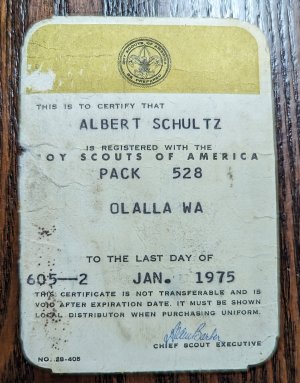
The guys on the SWAT team used to call me "the last Boy Scout"... I was a scout, and my oldest son was in scouting until they had a "career" day where the parents showed up and gave a presentation regarding what they did... I showed the scouts our 30th Anniversary SWAT team video which highlighted a bunch of our training (explosive breaching, fast roping out of helos, maritime interdiction and high speed boat/ship boarding, sniper shooting, etc. I got authorization to bring one of our armored vehicles and to show the scouts our equipment, no firearms, but the breaching ram, our shields, plate carriers, halligans, helmets, harnesses, etc..
A few of the parents were "offended" and actually wrote a letter to one of the head scout exec's in the State stating that my presentation encouraged "violence" and glorified "guns" and the "use of force"... I was incredulous because I didn't show anything graphic and in the video we were only shooting targets and I didn't bring any firearms to the presentation.. what was even more astonishing to me was that one of the complainants was active duty Navy!
At any rate I pulled my kid out of the scouts.. in this area unfortunately, scouting has lost its way, they no longer do long hikes, overnight backpack trips, etc... mainly because the people doing it now are physically unable to, and/or lack the no how.. I would eagerly get involved and do it, but the Ken And Karen parents would make me want to suck start my pistol!

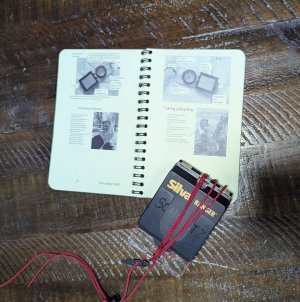
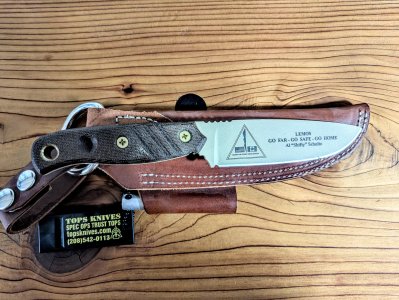
But I digress... @les I have to disagree with you regarding the "plastic" compasses.. I taught at LEMOS (Law Enforcement Mountain Operations Schoo)l in the Selkirk Mountains of Idaho and I have to say that the SILVA Ranger is the gold standard of compasses today.. and they are intended to use with UTM maps and templates.
I must admit that I appreciate technology as well and have several handheld GPS' units.. my current go to is a GARMIN 66i. I haven't found a place yet that I can't use it. But if I need to pull the SILVA Ranger out of the pack, I can. I agree with you, everyone should be able to read a map and use a compass. That's just basic dude stuff.
 

Attachments

  • PXL_20260309_234611463.jpg
    PXL_20260309_234611463.jpg
    2.4 MB · Views: 7
  • PXL_20240225_044041428.MP~2.jpg
    PXL_20240225_044041428.MP~2.jpg
    1,014.2 KB · Views: 6
  • PXL_20240225_044022748.jpg
    PXL_20240225_044022748.jpg
    1.7 MB · Views: 6
  • PXL_20260222_003942407~2.jpg
    PXL_20260222_003942407~2.jpg
    2.5 MB · Views: 7
Opinions vary. I have plastics, but don't trust them. In part, because I'm hard on gear.

My go to is and has been for a long time, a .mil lensatic with tritium. Worked for me everywhere from 145° desserts to -65° taiga. Could it fail? Sure. Everything mechanical can, but it's the least fragile compass I can find, and it's seen a lot of miles.
 
Opinions vary. I have plastics, but don't trust them. In part, because I'm hard on gear.

My go to is and has been for a long time, a .mil lensatic with tritium. Worked for me everywhere from 145° desserts to -65° taiga. Could it fail? Sure. Everything mechanical can, but it's the least fragile compass I can find, and it's seen a lot of miles.
I still have my USMC issue metal lensatic compas as well. It's old and doesn't have the features that the Silva has and I like the ability to set the clear plastic base of the Silva on a map see the map features while doing my plotting.
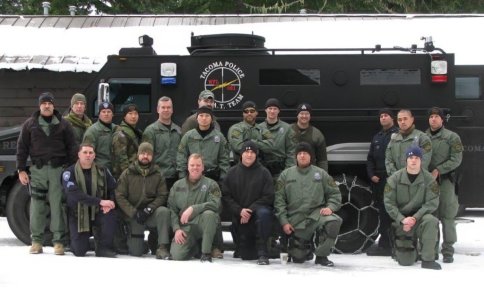
This came in handy when we were organizing grid searches in the dark on Mt. Rainier when we were searching for the murderer of Ranger Margaret Anderson.

Outside Magazine did a pretty good article about the manhunt... The attached pic is of my team and I taken after we recovered his body.


Attachments

  • Longmire 1~2.jpg
    Longmire 1~2.jpg
    113.6 KB · Views: 5
The guys on the SWAT team used to call me "the last Boy Scout"... That's just basic dude stuff.
A Pat Mac reference!? Yeah dude! Walking through a neighborhood garage sale last Fall I found a BSA Order of the Arrow Handbook!? Camp Bear Paw BSA Team up here had a tremendous OtA ceremony; midnight bonfire next to the lake, Chief BSA dude wore a mondo whitetail shoulder mount head piece. GREAT memories of wtf is this ?!
 
Back
Top