F
Field Ethos
Guest
By Scott Longman
If it were the later 1700s and you were trying to make a military name for yourself in upstart America, it would’ve pretty much sucked to have a second cousin named George Washington. Well, at least if he was that George Washington, which it was, but William Washington nevertheless went on to profoundly distinguish himself. British officer Brigadier General Lord Charles Cornwallis, after surrendering, stated that “There could be no more formidable antagonist in a charge at the head of his cavalry than Colonel William Washington.” The way that William earned that reputation was with big balls and an even bigger brain.
When the American Revolution started, William began as a Minuteman, then ultimately integrated into the Army. His first notable heroism was at Trenton, New Jersey, where he led a thundering horseback-and-saber-slashing charge at a Hessian artillery unit and triumphantly overran it, even though he was wounded in the process. That act, alone, proved him. He was promoted to Major.
He later was further promoted to Lieutenant Colonel, went on to be the Regimental Commander of the Fourth Continental Light Dragoons, and engaged in extensive combat. Among his most roaring achievements was at the famed Battle of Cowpens. He countered an enemy cavalry charge, engaging in brutal saber-to-saber combat, before then leading a surprise countercharge that completely threw the British off. The patriots emerged victorious, and that proved to be a turning point in the British southern campaign. One contemporary historian, Dr. David Ramsay, wrote: “The glory and importance of this action resounded from one end of the continent to the other … and seemed to be like a resurrection from the dead to the southern states.” Washington was later awarded a silver medal for valor from Congress.
He further led his troops in multiple additional battles, until the Battle of Eutaw Springs. There, his cavalry got entangled in thick brush, and he was forcibly dismounted and bayonetted, then taken captive. He survived and spent the rest of the war as a POW. But being the world-class stud that he was, he fulfilled every guy’s nurse fantasy by being tended to by the “beautiful, young heiress” Jane Elliott, whom he married four months after the Brits finally skyed out for good. Both of their children arrived more than nine months after their wedding, so it wasn’t quite the whole nurse fantasy, but it got there eventually.
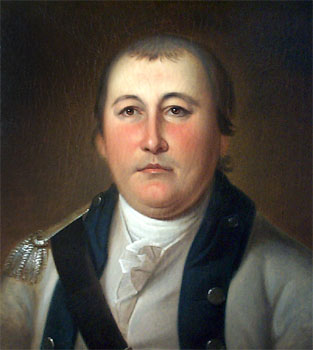
As stunningly epic as all that was, he had at least one action which didn’t so much involve big balls, but rather his big brain. He’d gone after a certain Colonel Rowland Rugeley, who was the commander of an element of loyalist forces. Washington managed to corner them at Rugeley’s Mill, a farm outside Camden, South Carolina, on December 4, 1780.
Tactically, Washington was facing all kinds of wrong: the crown-cretins had everything going for them. First, they had high ground, which meant both a great field of fire and a bad uphill assault for the patriots. Second, they also had a fortified stonewall defensive position. And they somewhat outnumbered him.
So Washington sent out elements to surround the place, both to prevent escape and resupply. And then he got to thinking: assaulting over that killing field of fire would result in devastation, so that was out of the question. Nor did he have any prospect of reinforcements. Nor was there a chance of getting any siege artillery, which would have made short work of the structure, stone walls or not. But he still was determined to accomplish this mission. Then, the Washington family brain came up with this: “What if I simply faked these royalist retards into surrender?”
Out of sight, he had his men come up with a pine log, painted it black, and came up with a way of attaching wheels. He ended up with a convincing facsimile of some heavy arty, which he put into position with an apparent direct-fire mission. Had that cannon been real, it would have been conclusive.
We can only imagine what Rugeley thought the instant he first saw it, but we do know what he did, which was surrender immediately. Washington and his forces then secured the objective and the prisoners, all while suffering zero casualties. No, that’s not quite as good as his cousin George dropkicking the King someplace into the English Channel and starting the best damn country that ever was, but it contributed toward those outcomes. But by any measure, William Washinton was a world-class success.
The post The Other Washington Kicked Some Arse appeared first on Field Ethos.
Continue reading...
If it were the later 1700s and you were trying to make a military name for yourself in upstart America, it would’ve pretty much sucked to have a second cousin named George Washington. Well, at least if he was that George Washington, which it was, but William Washington nevertheless went on to profoundly distinguish himself. British officer Brigadier General Lord Charles Cornwallis, after surrendering, stated that “There could be no more formidable antagonist in a charge at the head of his cavalry than Colonel William Washington.” The way that William earned that reputation was with big balls and an even bigger brain.
When the American Revolution started, William began as a Minuteman, then ultimately integrated into the Army. His first notable heroism was at Trenton, New Jersey, where he led a thundering horseback-and-saber-slashing charge at a Hessian artillery unit and triumphantly overran it, even though he was wounded in the process. That act, alone, proved him. He was promoted to Major.
He later was further promoted to Lieutenant Colonel, went on to be the Regimental Commander of the Fourth Continental Light Dragoons, and engaged in extensive combat. Among his most roaring achievements was at the famed Battle of Cowpens. He countered an enemy cavalry charge, engaging in brutal saber-to-saber combat, before then leading a surprise countercharge that completely threw the British off. The patriots emerged victorious, and that proved to be a turning point in the British southern campaign. One contemporary historian, Dr. David Ramsay, wrote: “The glory and importance of this action resounded from one end of the continent to the other … and seemed to be like a resurrection from the dead to the southern states.” Washington was later awarded a silver medal for valor from Congress.
The Other Washington
He further led his troops in multiple additional battles, until the Battle of Eutaw Springs. There, his cavalry got entangled in thick brush, and he was forcibly dismounted and bayonetted, then taken captive. He survived and spent the rest of the war as a POW. But being the world-class stud that he was, he fulfilled every guy’s nurse fantasy by being tended to by the “beautiful, young heiress” Jane Elliott, whom he married four months after the Brits finally skyed out for good. Both of their children arrived more than nine months after their wedding, so it wasn’t quite the whole nurse fantasy, but it got there eventually.
As stunningly epic as all that was, he had at least one action which didn’t so much involve big balls, but rather his big brain. He’d gone after a certain Colonel Rowland Rugeley, who was the commander of an element of loyalist forces. Washington managed to corner them at Rugeley’s Mill, a farm outside Camden, South Carolina, on December 4, 1780.
Tactically, Washington was facing all kinds of wrong: the crown-cretins had everything going for them. First, they had high ground, which meant both a great field of fire and a bad uphill assault for the patriots. Second, they also had a fortified stonewall defensive position. And they somewhat outnumbered him.
Revolutionary Ruse
So Washington sent out elements to surround the place, both to prevent escape and resupply. And then he got to thinking: assaulting over that killing field of fire would result in devastation, so that was out of the question. Nor did he have any prospect of reinforcements. Nor was there a chance of getting any siege artillery, which would have made short work of the structure, stone walls or not. But he still was determined to accomplish this mission. Then, the Washington family brain came up with this: “What if I simply faked these royalist retards into surrender?”
Out of sight, he had his men come up with a pine log, painted it black, and came up with a way of attaching wheels. He ended up with a convincing facsimile of some heavy arty, which he put into position with an apparent direct-fire mission. Had that cannon been real, it would have been conclusive.
We can only imagine what Rugeley thought the instant he first saw it, but we do know what he did, which was surrender immediately. Washington and his forces then secured the objective and the prisoners, all while suffering zero casualties. No, that’s not quite as good as his cousin George dropkicking the King someplace into the English Channel and starting the best damn country that ever was, but it contributed toward those outcomes. But by any measure, William Washinton was a world-class success.
The post The Other Washington Kicked Some Arse appeared first on Field Ethos.
Continue reading...
