F
Field Ethos
Guest
By Neil Emery
There’s something timeless about a single-action revolver. Sometimes it’s nice to slow down, line up the sights and enjoy the process. The Heritage Manufacturing Rough Rider single-action lineup offers a number of choices in barrel lengths, finishes and grip styles, with most models at a street price south of $200.
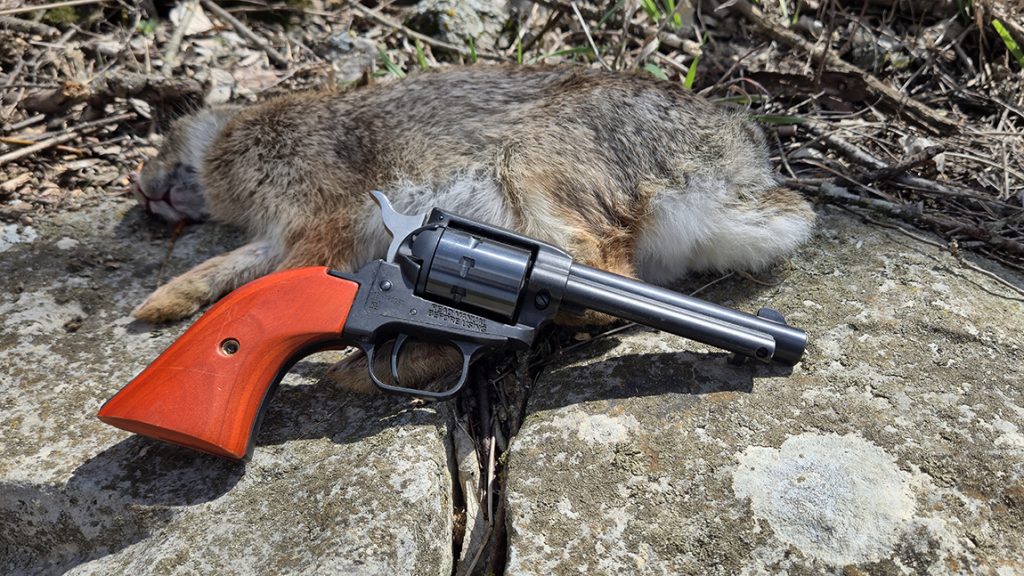
Tested is the 4.75-inch barrel, nine-round version that comes with both 22 LR and 22 WMR (Magnum) cylinders. My son and I have run this very model for a few years of plinking and varmint control. There are times when the extended sight radius of a longer barrel and adjustable sights would be nice, but overall, my choice is the shorter barrel and fixed sights for simplicity and ease of carry. The nice part is, it won’t break the bank to have both options.
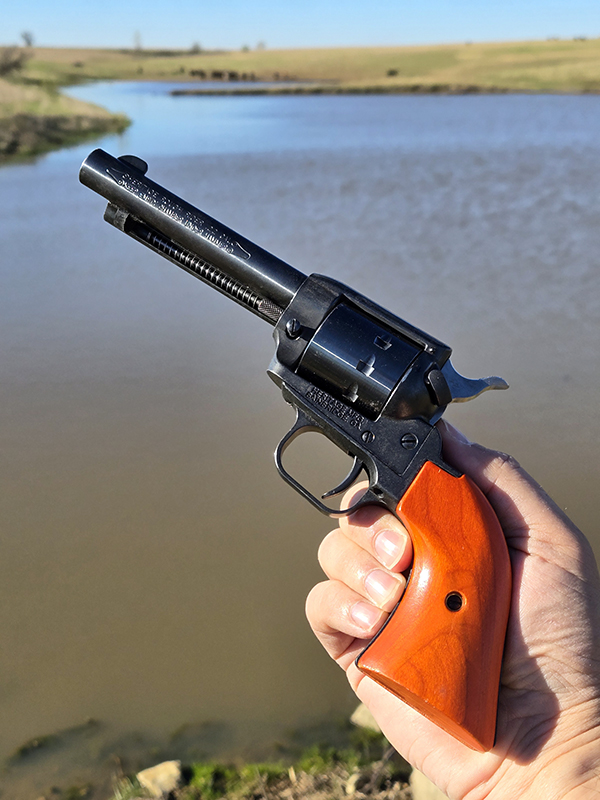
Based on a scaled-down version of the iconic Colt Single Action Army, the Rough Rider has a flip-open loading gate where you load and unload with the hammer at the second click (half-cock)—this is also where the cylinder spins freely. The spring-loaded ejector rod is on the right side of the barrel. It’s best not to be in a hurry when loading or unloading and if you are new to single-actions, take special care with the direction of the barrel as you do so. Flagging yourself or someone else is embarrassing at best and deadly at worst. The 4.75-inch, nine-round model weighs in at 29.8 ounces with its zinc-alloy frame and steel barrel and cylinder. Steel-frame versions add another two to four ounces and extreme barrel lengths can add quite a bit more weight—the 16-inch barrel Rough Rider weighs 49 ounces!
The two-cylinder option is the real winner here. Pop in the 22 LR cylinder for cheap, quiet plinking and pest control. When you need more definitive punch, swap out to the 22 WMR cylinder and you’ll see noticeable terminal improvements on tougher varmints like trash pandas and coyotes. Switching from 22 LR to 22 WMR can increase velocity 200-350 fps in short-barreled handguns and significantly more so in rifle-length barrels. That translates to roughly 50-75 percent more energy on target out of a 4.75-inch barrel.
22 WMR cases are both longer and slightly larger in diameter than 22 LR cases. Manufacturers strongly advise against shooting 22 LR (or shorts) in a 22 WMR chamber because the case has extra room and can rupture. The smaller 22 LR cylinder won’t accept a 22 WMR round. Luckily, it’s quite easy to change out the cylinder.
One more note about the cartridge differences in this setup. When you fire a gun, bullets are forced to obturate, or swell slightly under pressure from the burning powder/gas behind them. The bullet creates a seal against the rifling and the pressure buildup behind it forces it down the barrel. The nominal groove diameter for 22 WMR is .224 inch while the 22 LR is slightly smaller at .222 inch. The barrel in this 22 LR/22 WMR combo (and others like it) is cut to the larger 22 WMR groove diameter, so the 22 LR loads have to obturate slightly more than they would out of a regular 22 LR barrel. With the larger diameter barrel, gas can escape around the bullet, affecting speed and accuracy. We’re talking a few dozen fps, so it’s unlikely to matter unless you’re shooting at long-for-22 distances. You may also find more success with high velocity 22 LRs that force the bullets to obturate more aggressively, like Stingers and Mini-Mags.
Like all current Heritage Rough Rider rimfire models, this one includes a manual hammer-block safety on the left side of the frame. It’s a straightforward lever that physically prevents the hammer from contacting the firing pin when engaged. While I’m not a fan of adding an external safety to classic designs like single-actions or lever guns, it does add a level of protection in the case of a dropped loaded pistol. It’s also useful for dry fire practice without the use of snap caps to prevent the firing pin from hitting the empty chamber in rimfires. One other consideration, if you’re going to let your kid or a new shooter load and unload a single-action like this (which includes pulling back the hammer to half-cock and releasing it safely back down after loading), you might feel a bit better about a safety that stops it from firing if they lose grip on the hammer. Food for thought.
Rough Riders are made in the USA and remarkably well priced for the fun you’ll have burning through bricks of 22 ammo.

Cost: MSRP is $207.99.
Pros: Economical, lots of finish & barrel length choices, and nine rounds of 22 Magnum at your fingertips! Your local Range Safety Fudd will be less scared of you, compared to all the black guns you normally shoot there.
Cons: Manual safety, your local Range Safety Fudd may actually want to start a conversation with you—better have a scary-looking black gun nearby if you don’t want to chat.
The post Back Yard to Back 40 appeared first on Field Ethos.
Continue reading...
There’s something timeless about a single-action revolver. Sometimes it’s nice to slow down, line up the sights and enjoy the process. The Heritage Manufacturing Rough Rider single-action lineup offers a number of choices in barrel lengths, finishes and grip styles, with most models at a street price south of $200.
Tested is the 4.75-inch barrel, nine-round version that comes with both 22 LR and 22 WMR (Magnum) cylinders. My son and I have run this very model for a few years of plinking and varmint control. There are times when the extended sight radius of a longer barrel and adjustable sights would be nice, but overall, my choice is the shorter barrel and fixed sights for simplicity and ease of carry. The nice part is, it won’t break the bank to have both options.
Based on a scaled-down version of the iconic Colt Single Action Army, the Rough Rider has a flip-open loading gate where you load and unload with the hammer at the second click (half-cock)—this is also where the cylinder spins freely. The spring-loaded ejector rod is on the right side of the barrel. It’s best not to be in a hurry when loading or unloading and if you are new to single-actions, take special care with the direction of the barrel as you do so. Flagging yourself or someone else is embarrassing at best and deadly at worst. The 4.75-inch, nine-round model weighs in at 29.8 ounces with its zinc-alloy frame and steel barrel and cylinder. Steel-frame versions add another two to four ounces and extreme barrel lengths can add quite a bit more weight—the 16-inch barrel Rough Rider weighs 49 ounces!
The Convertible Six-Shooter
The two-cylinder option is the real winner here. Pop in the 22 LR cylinder for cheap, quiet plinking and pest control. When you need more definitive punch, swap out to the 22 WMR cylinder and you’ll see noticeable terminal improvements on tougher varmints like trash pandas and coyotes. Switching from 22 LR to 22 WMR can increase velocity 200-350 fps in short-barreled handguns and significantly more so in rifle-length barrels. That translates to roughly 50-75 percent more energy on target out of a 4.75-inch barrel.
22 WMR cases are both longer and slightly larger in diameter than 22 LR cases. Manufacturers strongly advise against shooting 22 LR (or shorts) in a 22 WMR chamber because the case has extra room and can rupture. The smaller 22 LR cylinder won’t accept a 22 WMR round. Luckily, it’s quite easy to change out the cylinder.
One more note about the cartridge differences in this setup. When you fire a gun, bullets are forced to obturate, or swell slightly under pressure from the burning powder/gas behind them. The bullet creates a seal against the rifling and the pressure buildup behind it forces it down the barrel. The nominal groove diameter for 22 WMR is .224 inch while the 22 LR is slightly smaller at .222 inch. The barrel in this 22 LR/22 WMR combo (and others like it) is cut to the larger 22 WMR groove diameter, so the 22 LR loads have to obturate slightly more than they would out of a regular 22 LR barrel. With the larger diameter barrel, gas can escape around the bullet, affecting speed and accuracy. We’re talking a few dozen fps, so it’s unlikely to matter unless you’re shooting at long-for-22 distances. You may also find more success with high velocity 22 LRs that force the bullets to obturate more aggressively, like Stingers and Mini-Mags.
Rough & (Safely) Ready
Like all current Heritage Rough Rider rimfire models, this one includes a manual hammer-block safety on the left side of the frame. It’s a straightforward lever that physically prevents the hammer from contacting the firing pin when engaged. While I’m not a fan of adding an external safety to classic designs like single-actions or lever guns, it does add a level of protection in the case of a dropped loaded pistol. It’s also useful for dry fire practice without the use of snap caps to prevent the firing pin from hitting the empty chamber in rimfires. One other consideration, if you’re going to let your kid or a new shooter load and unload a single-action like this (which includes pulling back the hammer to half-cock and releasing it safely back down after loading), you might feel a bit better about a safety that stops it from firing if they lose grip on the hammer. Food for thought.
Rough Riders are made in the USA and remarkably well priced for the fun you’ll have burning through bricks of 22 ammo.
Cost: MSRP is $207.99.
Pros: Economical, lots of finish & barrel length choices, and nine rounds of 22 Magnum at your fingertips! Your local Range Safety Fudd will be less scared of you, compared to all the black guns you normally shoot there.
Cons: Manual safety, your local Range Safety Fudd may actually want to start a conversation with you—better have a scary-looking black gun nearby if you don’t want to chat.
The post Back Yard to Back 40 appeared first on Field Ethos.
Continue reading...

