F
Field Ethos
Guest
By Cody Fongemie
When you think of buffalo hunting, you probably picture the West. That makes sense. Buffalo have always roamed there. An entire era of American history is defined by the estimated 30 million buffalo that ranged from the Great Plains to the wild frontier of Kentucky. When we imagine the hunters, our minds go to the Plains Tribes or the countless men heading west for pelts. The image is cinematic: wide-open grasslands, dust on the horizon, riders pressing into a thundering herd. What doesn’t fit is a Virginia gentleman in a powdered wig.
Picturing George Washington, the nation’s first president, the very image of refined colonial dignity, hunting buffalo on the frontier sounds like a bad history joke. But it happened, and the story is better than most people realize.
We have rightly put POTUS #1 on a pedestal. He was an extraordinary man living through extraordinary times, and his place in history is well earned. But he wasn’t always the prim and proper figure your high school textbook wants you to believe he was. Long before the portrait painters and the ceremonies, Washington was a young man who thrived in hard country. In reality, he was a flat-out badass who would put any of the outdoor influencers clogging your Instagram feed to shame.
During his youth, Washington fought in the French and Indian War and found himself in situations that had nothing to do with drawing rooms and diplomatic courtesies. He fell into the Allegheny River in the dead of winter, pulled himself out, and kept moving. He led desperate fighting retreats through thick wilderness with everything falling apart around him. Those experiences didn’t just build his reputation; they built the man. They gave him a deep, firsthand knowledge of the wilderness that most of his contemporaries simply didn’t have, and it was knowledge he would put to good use long after the gunfire stopped.
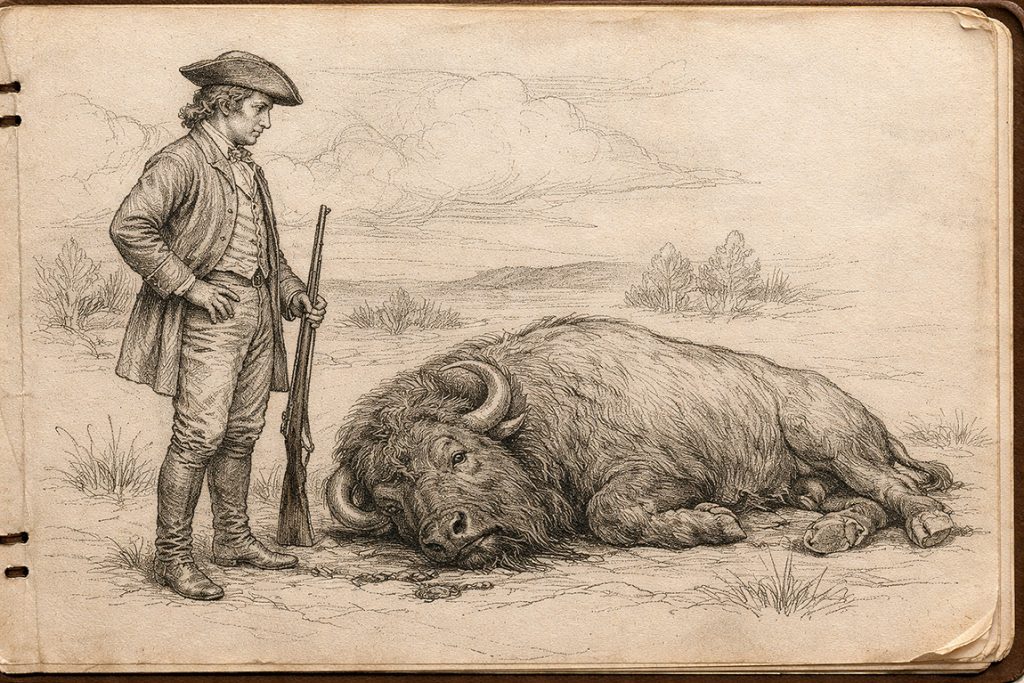
Illustration by Skynet (not really)
After the French and Indian War ended in 1763, and right up until the American Revolution began in 1775, one of Washington’s primary pursuits was land speculation. Throughout the 1700s, especially the decades leading to the 1770s, thousands of settlers were pouring over the Blue Ridge Mountains into the frontier of Kentucky and the Ohio River Valley, and land speculators moved right along with them, staking claims in territory not yet formally settled. Washington was one of those speculators, and that work carried him deep into wild country at a time when buffalo herds could still be seen drifting through the region.
It’s hard to picture today. Imagine sipping bourbon on the Bourbon Trail outside of Louisville and watching a buffalo herd push through—but there was a time when that would have been a completely ordinary sight. Much of it came down to the naturally occurring salt licks scattered across the region, mineral deposits that buffalo sought out and returned to season after season, cutting trails through the wilderness that settlers would eventually follow into the interior of the continent.
In the fall of 1770, Washington and fellow Virginian Dr. James Craik, along with several servants, set out on a nine-week expedition into this territory to scout land he was eyeing for purchase. This was just five years before the Revolutionary War began. It was technically a business trip, but out there, business and survival had a way of blending. Hunting wasn’t optional. It was how they ate, how they kept moving, and how they made it back.
This wasn’t some carefully orchestrated gentlemen’s hunt as they have in Europe and the Virginia countryside. There were no calls ahead, no support staff, no curated experience. It was Washington, weeks removed from the comforts of Mount Vernon, dressed in trail-worn buckskins, long rifle in hand, closing the distance on a beast that could top a ton and if he missed, could charge him instantly. And to be clear, he wasn’t delegating this to one of the few servants on the trip. He shouldered the rifle himself and got to work. Over the course of the expedition, he put down five buffalo in Ohio territory. Five. The man who would take command of the Continental Army just five years later was out there in the wilderness, living off the land and stacking buffalo like he’d been doing it his whole life.
Strip away the powdered wig and the portrait painter, and what you’re left with is a man completely at home in hard country, putting meat on the ground the old way. That’s the version of Washington most of us were never taught about, and honestly, I think it only makes him more of a legend.
The post George Washington: Buffalo Hunter appeared first on Field Ethos.
Continue reading...
When you think of buffalo hunting, you probably picture the West. That makes sense. Buffalo have always roamed there. An entire era of American history is defined by the estimated 30 million buffalo that ranged from the Great Plains to the wild frontier of Kentucky. When we imagine the hunters, our minds go to the Plains Tribes or the countless men heading west for pelts. The image is cinematic: wide-open grasslands, dust on the horizon, riders pressing into a thundering herd. What doesn’t fit is a Virginia gentleman in a powdered wig.
A Different Kind of Founding Father
Picturing George Washington, the nation’s first president, the very image of refined colonial dignity, hunting buffalo on the frontier sounds like a bad history joke. But it happened, and the story is better than most people realize.
We have rightly put POTUS #1 on a pedestal. He was an extraordinary man living through extraordinary times, and his place in history is well earned. But he wasn’t always the prim and proper figure your high school textbook wants you to believe he was. Long before the portrait painters and the ceremonies, Washington was a young man who thrived in hard country. In reality, he was a flat-out badass who would put any of the outdoor influencers clogging your Instagram feed to shame.
During his youth, Washington fought in the French and Indian War and found himself in situations that had nothing to do with drawing rooms and diplomatic courtesies. He fell into the Allegheny River in the dead of winter, pulled himself out, and kept moving. He led desperate fighting retreats through thick wilderness with everything falling apart around him. Those experiences didn’t just build his reputation; they built the man. They gave him a deep, firsthand knowledge of the wilderness that most of his contemporaries simply didn’t have, and it was knowledge he would put to good use long after the gunfire stopped.
Illustration by Skynet (not really)
Into the Frontier
After the French and Indian War ended in 1763, and right up until the American Revolution began in 1775, one of Washington’s primary pursuits was land speculation. Throughout the 1700s, especially the decades leading to the 1770s, thousands of settlers were pouring over the Blue Ridge Mountains into the frontier of Kentucky and the Ohio River Valley, and land speculators moved right along with them, staking claims in territory not yet formally settled. Washington was one of those speculators, and that work carried him deep into wild country at a time when buffalo herds could still be seen drifting through the region.
It’s hard to picture today. Imagine sipping bourbon on the Bourbon Trail outside of Louisville and watching a buffalo herd push through—but there was a time when that would have been a completely ordinary sight. Much of it came down to the naturally occurring salt licks scattered across the region, mineral deposits that buffalo sought out and returned to season after season, cutting trails through the wilderness that settlers would eventually follow into the interior of the continent.
Washington in Buckskins
In the fall of 1770, Washington and fellow Virginian Dr. James Craik, along with several servants, set out on a nine-week expedition into this territory to scout land he was eyeing for purchase. This was just five years before the Revolutionary War began. It was technically a business trip, but out there, business and survival had a way of blending. Hunting wasn’t optional. It was how they ate, how they kept moving, and how they made it back.
This wasn’t some carefully orchestrated gentlemen’s hunt as they have in Europe and the Virginia countryside. There were no calls ahead, no support staff, no curated experience. It was Washington, weeks removed from the comforts of Mount Vernon, dressed in trail-worn buckskins, long rifle in hand, closing the distance on a beast that could top a ton and if he missed, could charge him instantly. And to be clear, he wasn’t delegating this to one of the few servants on the trip. He shouldered the rifle himself and got to work. Over the course of the expedition, he put down five buffalo in Ohio territory. Five. The man who would take command of the Continental Army just five years later was out there in the wilderness, living off the land and stacking buffalo like he’d been doing it his whole life.
Strip away the powdered wig and the portrait painter, and what you’re left with is a man completely at home in hard country, putting meat on the ground the old way. That’s the version of Washington most of us were never taught about, and honestly, I think it only makes him more of a legend.
The post George Washington: Buffalo Hunter appeared first on Field Ethos.
Continue reading...
