F
Field Ethos
Guest
By Neal Emery
Traditionally, a good written hunting story opens with a prolific, flowery description of the environment to pull you in—like, “As dawn’s first golden light kissed the dew-drenched sagebrush, turning each droplet into a tiny flame against the rose-tinted sky, a faint flicker of movement caught my eye—the hidden mule deer buck, cloaked in shadow and stillness, betrayed only by that single, electric whisper of life in the vast, awakening basin.” Okay, maybe that’s a bit overkill, but you get the point. You don’t often see published tales starting with, “So there I was, riding down the trail in the back seat of a truck, when…” It’s just not poetic, romantic, or particularly attention-grabbing. That said, it’s a story many hunters can relate to.
So there I was, riding down the trail in the back seat of a truck when I looked down and noticed my scope turret wasn’t on zero. Not only that, but I had no idea if it was a full rotation high or low—because that particular tactical turret lacked a zero stop or lock. As much as I tried to recall which hash mark marked my zero, I couldn’t for the life of me remember. And I was up next on a hunt for a cagey pronghorn that wouldn’t stick around long enough for me to pull the bolt, compare barrel alignment to the scope, and figure out the right revolution while keeping the rifle steady. Antics ensued … not my finest hour.
With nearly two decades in the hunting and shooting industry, I’ve grown accustomed to jumping between gear—rarely my own—with little time to get familiar with it before the next event and different sponsor setups. It’s a great problem to have, but a problem nonetheless. When hunting at distances that demand dialing a turret, there’s real advantage to a locking zero system: you can dial down confidently until you hit your sight-in zero, no worries about the turret spinning freely (especially a full extra rotation that looks normal) in a boat, truck, or scabbard. Different manufacturers have their solutions; for Leupold, the ZeroLock system on many models delivers peace of mind—figurative, and sometimes literal, across the “Planes, Trains and Automobiles” chaos of global hunting.
ZeroLock is just one feature that makes the Mark 5HD line particularly great for tough, backcountry Western-style hunts.
Most Western hunting involves glassing big country. Even after spotting game, terrain often forces longer-than-average shots. Add mountains, serious hiking, and packing, and weight becomes critical. Throw in NRL Hunter matches or ringing steel at a mile, and scopes with significant elevation travel plus reliable tracking eliminate many budget optics. This is where the Leupold Mark 5HD 5-25×56 shines.
The Mark 5HD line launched in early 2018 and has more than proven itself in the field and on the range over the past eight years. It now includes models like 2-10×30, 3.6-18×44, and 7-35×56 alongside the 5-25×56. All feature a 35mm main tube, generous eye relief, and multiple reticle options. Premium optics makers have pushed waterproofing, shockproofing, light transmission, and glass quality to new levels—Leupold meets or exceeds those while staying lighter than most competitors with similar features.
In the 5-25x (or close) power class for top hunting and competition scopes, few match the Mark 5HD’s featherweight 30-ounce build while offering anywhere near its 120 MOA (35 MRAD) elevation adjustment. It’s even rarer to find that combo at or below the Mark 5HD’s $2,200–$2,600 retail price. Add an integrated throw lever, Motion Sensor Technology (on illuminated models) that auto-activates/deactivates to save battery, and Leupold’s legendary lifetime guarantee on a scope designed, machined, and assembled in the USA, and the Mark 5HD punches well above its weight class.
Cost: $2,200–$2,600, depending on illumination and reticle choice.
Other Options: Most Mark 5HD models are first focal plane (FFP), with at least one exception in the line. MOA (1/4-click) and MIL (0.1-click) adjustments are available across models. Reticle choices vary by configuration but include CMR (MOA/MIL), PR1 (MOA/MIL), PR2 (MOA/MIL), TREMOR3, RH1 (Gunwerks MOA), TMR, TMOA Plus, Impact-60, and H59.
Pros: Checks every box in its price range (and often above) with lightweight design, massive elevation travel, quality glass, and a near-foolproof ZeroLock/zero-stop combo.
Cons: Large footprint (15.7-inch overall length) on smaller rifles.
The post Locked Down to Go Long appeared first on Field Ethos.
Continue reading...
Traditionally, a good written hunting story opens with a prolific, flowery description of the environment to pull you in—like, “As dawn’s first golden light kissed the dew-drenched sagebrush, turning each droplet into a tiny flame against the rose-tinted sky, a faint flicker of movement caught my eye—the hidden mule deer buck, cloaked in shadow and stillness, betrayed only by that single, electric whisper of life in the vast, awakening basin.” Okay, maybe that’s a bit overkill, but you get the point. You don’t often see published tales starting with, “So there I was, riding down the trail in the back seat of a truck, when…” It’s just not poetic, romantic, or particularly attention-grabbing. That said, it’s a story many hunters can relate to.
So there I was, riding down the trail in the back seat of a truck when I looked down and noticed my scope turret wasn’t on zero. Not only that, but I had no idea if it was a full rotation high or low—because that particular tactical turret lacked a zero stop or lock. As much as I tried to recall which hash mark marked my zero, I couldn’t for the life of me remember. And I was up next on a hunt for a cagey pronghorn that wouldn’t stick around long enough for me to pull the bolt, compare barrel alignment to the scope, and figure out the right revolution while keeping the rifle steady. Antics ensued … not my finest hour.
With nearly two decades in the hunting and shooting industry, I’ve grown accustomed to jumping between gear—rarely my own—with little time to get familiar with it before the next event and different sponsor setups. It’s a great problem to have, but a problem nonetheless. When hunting at distances that demand dialing a turret, there’s real advantage to a locking zero system: you can dial down confidently until you hit your sight-in zero, no worries about the turret spinning freely (especially a full extra rotation that looks normal) in a boat, truck, or scabbard. Different manufacturers have their solutions; for Leupold, the ZeroLock system on many models delivers peace of mind—figurative, and sometimes literal, across the “Planes, Trains and Automobiles” chaos of global hunting.
ZeroLock is just one feature that makes the Mark 5HD line particularly great for tough, backcountry Western-style hunts.
Leupold Mark 5HD Features
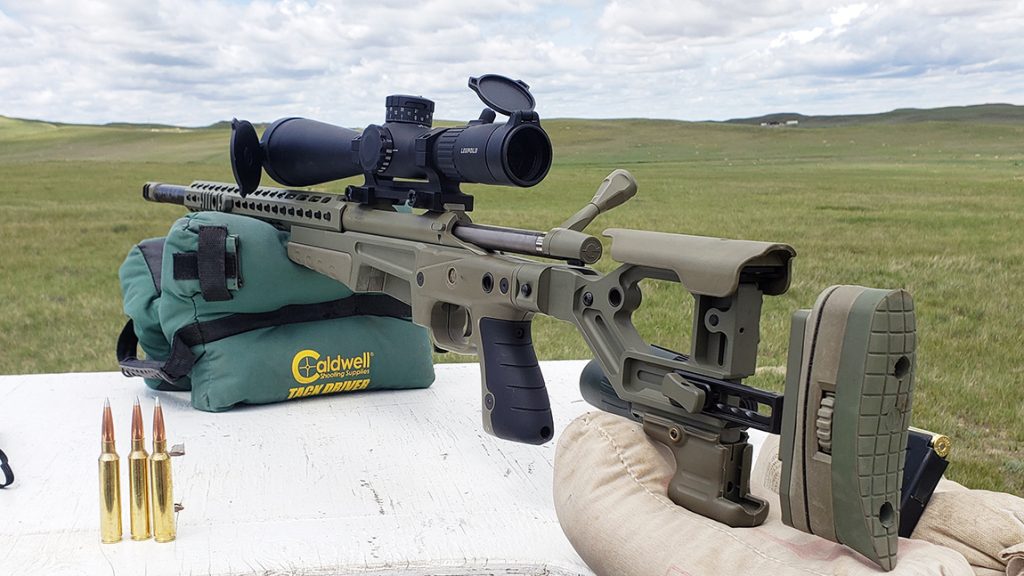
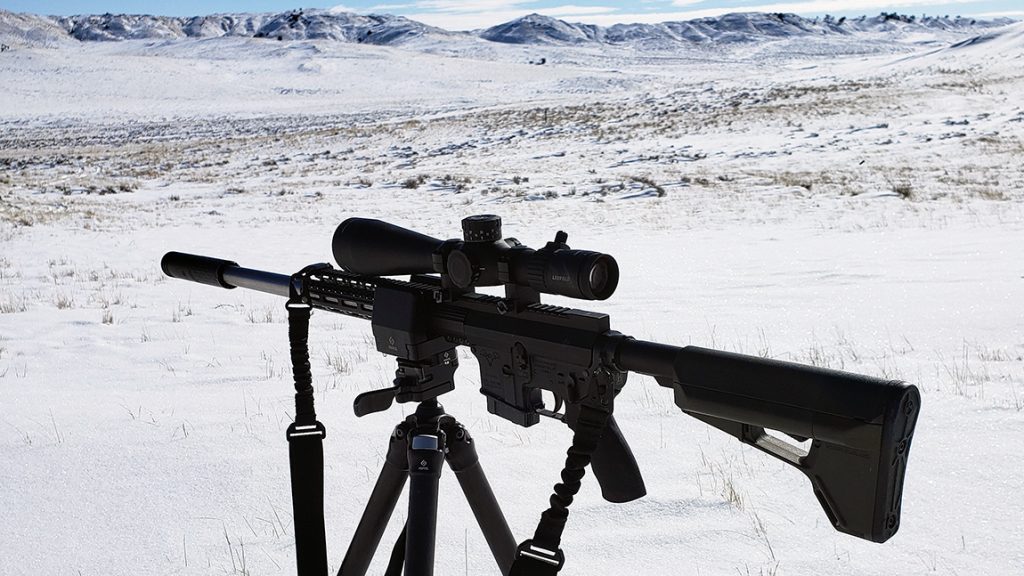
Most Western hunting involves glassing big country. Even after spotting game, terrain often forces longer-than-average shots. Add mountains, serious hiking, and packing, and weight becomes critical. Throw in NRL Hunter matches or ringing steel at a mile, and scopes with significant elevation travel plus reliable tracking eliminate many budget optics. This is where the Leupold Mark 5HD 5-25×56 shines.
The Mark 5HD line launched in early 2018 and has more than proven itself in the field and on the range over the past eight years. It now includes models like 2-10×30, 3.6-18×44, and 7-35×56 alongside the 5-25×56. All feature a 35mm main tube, generous eye relief, and multiple reticle options. Premium optics makers have pushed waterproofing, shockproofing, light transmission, and glass quality to new levels—Leupold meets or exceeds those while staying lighter than most competitors with similar features.
In the 5-25x (or close) power class for top hunting and competition scopes, few match the Mark 5HD’s featherweight 30-ounce build while offering anywhere near its 120 MOA (35 MRAD) elevation adjustment. It’s even rarer to find that combo at or below the Mark 5HD’s $2,200–$2,600 retail price. Add an integrated throw lever, Motion Sensor Technology (on illuminated models) that auto-activates/deactivates to save battery, and Leupold’s legendary lifetime guarantee on a scope designed, machined, and assembled in the USA, and the Mark 5HD punches well above its weight class.
Cost: $2,200–$2,600, depending on illumination and reticle choice.
Other Options: Most Mark 5HD models are first focal plane (FFP), with at least one exception in the line. MOA (1/4-click) and MIL (0.1-click) adjustments are available across models. Reticle choices vary by configuration but include CMR (MOA/MIL), PR1 (MOA/MIL), PR2 (MOA/MIL), TREMOR3, RH1 (Gunwerks MOA), TMR, TMOA Plus, Impact-60, and H59.
Pros: Checks every box in its price range (and often above) with lightweight design, massive elevation travel, quality glass, and a near-foolproof ZeroLock/zero-stop combo.
Cons: Large footprint (15.7-inch overall length) on smaller rifles.
The post Locked Down to Go Long appeared first on Field Ethos.
Continue reading...

