C
Chad Adams
Guest
By Tiffany McDuffie
There is always a moment when chaos yields to craft. When raw elements stop colliding and begin to work together. For modern warfare, that moment arrived in the form of a gun, one so revolutionary it would later be remembered not just in history books, but on cocktail menus.
Enter the French Model 1897 75mm field cannon, known simply as the soixante-quinze. Conceived in secrecy and engineered with unprecedented precision, it transformed artillery from a blunt instrument into a disciplined craft. Where earlier guns lurched violently with each shot, the French 75 absorbed its own recoil, settled instantly back on target, and fired again. Fast. Controlled. Relentless. Hidden beneath its barrel was a hydro pneumatic recoil system so advanced it bordered on alchemy: fluid, gas, and pressure working together to absorb recoil and return the gun to battery without jumping.
The result was something the world had never seen. Accurate, rapid and repeatable fire. The gun stayed on target. The crew stayed seated. Shells fell seconds apart, not minutes. For the first time, artillery could deliver sustained, accurate fire without pause.
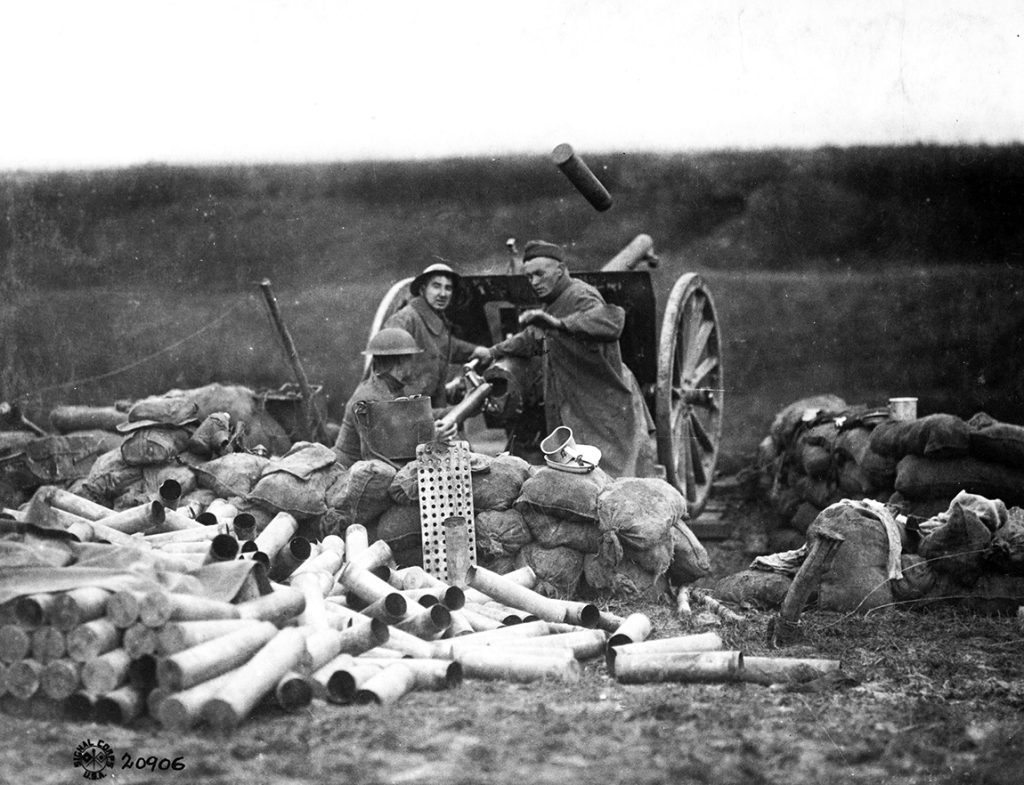
German advances disappeared under storms of French 75mm fire, the kind of violence that defined the Western Front. Feared for its speed and precision, the gun shattered enemy assaults and was eagerly adopted by American forces, who pushed it further still with mobile, single-gun tactics and direct-fire strikes against machine gun nests.
The Model 1897 French 75mm field gun did not just change the battlefield; it redefined the pace of war. It altered how the world understood firepower. That refinement became its legend and cemented its place in history.
During the First World War, somewhere between the trenches and the cafés that survived them, the name of the gun began to migrate from steel to glass. By around 1915, soldiers, expatriates, and bartenders were already using “French 75” to describe a drink with a shockingly fast kick. Bright and civilized on the surface, it was capable of landing far harder than expected. Early versions were not standardized. Some used brandy, others gin. Lemon and sugar formed the backbone, with sparkling wine added when available. It was less about recipe and more about sensation: sharp and immediate.

In the years after the war, as Europe shifted from survival to celebration, the drink found structure. Champagne replaced substitutes. Gin became dominant as cocktail culture standardized. By the 1920s, the French 75 had settled into the form we recognize today: gin, citrus, sugar, and Champagne. Elegant and bright, with a strong kick. The added carbonation speeds alcohol absorption, meaning a drink that feels light can land faster, and harder, than expected.
The name endured because it felt right. The artillery piece represented speed, control, and overwhelming effect delivered with mechanical precision. The cocktail mirrored that philosophy in liquid form: balanced, efficient, and deceptively powerful.
By 1945, the world had moved on. Bigger guns. Longer ranges. Thicker armor. The French 75 was finally retired, its era complete.
But its legacy endured.
Every modern quick firing field gun owes it a debt. Every 75mm tank cannon traces its lineage back to that Parisian workshop where secrecy, ingenuity, and pressure produced something timeless.
The cocktail endured as well, carried forward not by necessity, but by memory, ritual, and craft.
Today, when a French 75 is raised, it stands as a quiet reminder of the past, and of the enduring power of precision.
A simple French 75 can be built with 1 ounce of Condesa Gin Prickly Pear and Orange Blossom, 0.5 ounce of fresh lemon juice, 0.5 once of simple syrup, topped with 3 ounces of La Marca Prosecco for a bright, floral finish. Why Condesa Gin works here: Orange blossom plays naturally with the classic French 75, adding a soft, floral citrus note that lifts the cocktail with quiet elegance. Prickly pear brings gentle fruit sweetness and a rosy, almost watermelon like nuance, softening the lemon without tipping the drink into excess.
The post Fire for Effect—The French 75 appeared first on Field Ethos.
Continue reading...
There is always a moment when chaos yields to craft. When raw elements stop colliding and begin to work together. For modern warfare, that moment arrived in the form of a gun, one so revolutionary it would later be remembered not just in history books, but on cocktail menus.
Enter the French Model 1897 75mm field cannon, known simply as the soixante-quinze. Conceived in secrecy and engineered with unprecedented precision, it transformed artillery from a blunt instrument into a disciplined craft. Where earlier guns lurched violently with each shot, the French 75 absorbed its own recoil, settled instantly back on target, and fired again. Fast. Controlled. Relentless. Hidden beneath its barrel was a hydro pneumatic recoil system so advanced it bordered on alchemy: fluid, gas, and pressure working together to absorb recoil and return the gun to battery without jumping.
The result was something the world had never seen. Accurate, rapid and repeatable fire. The gun stayed on target. The crew stayed seated. Shells fell seconds apart, not minutes. For the first time, artillery could deliver sustained, accurate fire without pause.
Redefining the Battlefield
German advances disappeared under storms of French 75mm fire, the kind of violence that defined the Western Front. Feared for its speed and precision, the gun shattered enemy assaults and was eagerly adopted by American forces, who pushed it further still with mobile, single-gun tactics and direct-fire strikes against machine gun nests.
The Model 1897 French 75mm field gun did not just change the battlefield; it redefined the pace of war. It altered how the world understood firepower. That refinement became its legend and cemented its place in history.
During the First World War, somewhere between the trenches and the cafés that survived them, the name of the gun began to migrate from steel to glass. By around 1915, soldiers, expatriates, and bartenders were already using “French 75” to describe a drink with a shockingly fast kick. Bright and civilized on the surface, it was capable of landing far harder than expected. Early versions were not standardized. Some used brandy, others gin. Lemon and sugar formed the backbone, with sparkling wine added when available. It was less about recipe and more about sensation: sharp and immediate.
Hoist a French 75
In the years after the war, as Europe shifted from survival to celebration, the drink found structure. Champagne replaced substitutes. Gin became dominant as cocktail culture standardized. By the 1920s, the French 75 had settled into the form we recognize today: gin, citrus, sugar, and Champagne. Elegant and bright, with a strong kick. The added carbonation speeds alcohol absorption, meaning a drink that feels light can land faster, and harder, than expected.
The name endured because it felt right. The artillery piece represented speed, control, and overwhelming effect delivered with mechanical precision. The cocktail mirrored that philosophy in liquid form: balanced, efficient, and deceptively powerful.
By 1945, the world had moved on. Bigger guns. Longer ranges. Thicker armor. The French 75 was finally retired, its era complete.
But its legacy endured.
Every modern quick firing field gun owes it a debt. Every 75mm tank cannon traces its lineage back to that Parisian workshop where secrecy, ingenuity, and pressure produced something timeless.
The cocktail endured as well, carried forward not by necessity, but by memory, ritual, and craft.
Today, when a French 75 is raised, it stands as a quiet reminder of the past, and of the enduring power of precision.
French 75—The Recipe
A simple French 75 can be built with 1 ounce of Condesa Gin Prickly Pear and Orange Blossom, 0.5 ounce of fresh lemon juice, 0.5 once of simple syrup, topped with 3 ounces of La Marca Prosecco for a bright, floral finish. Why Condesa Gin works here: Orange blossom plays naturally with the classic French 75, adding a soft, floral citrus note that lifts the cocktail with quiet elegance. Prickly pear brings gentle fruit sweetness and a rosy, almost watermelon like nuance, softening the lemon without tipping the drink into excess.
The post Fire for Effect—The French 75 appeared first on Field Ethos.
Continue reading...

