F
Field Ethos
Guest
By John Kleespies
In mid-April of 1918, Germany rained high-explosives and chlorine gas on American troops protecting the French village of Seicheprey … for a solid 36 hours. Then, 3,000 elite Sturmtruppen overwhelmed the American trenches with flamethrowers and stick grenades, forcing the battle into a house-to-house brawl.
Germany’s objective at Seicheprey wasn’t to gain ground, but to embarrass America. Nonetheless, the 102nd Infantry rallied at nightfall and repelled the Sturmtruppen back to their original trench lines, thereby reversing Germany’s humiliation attempt: the Kaiser deployed his very best, and America’s Doughboys sent them packing.
In addition to encountering U.S. grit for the first time, Germany was also introduced to a new American weapon that helped turn the tide at Seicheprey, and beyond. Except … the Germans couldn’t figure out what this Sturmtruppen-defeating armament might be.
The High Command demanded answers! After all, their elites couldn’t possibly be defeated in a fair fight. The enemy must be winning through some unnatural means!
Finally, on July 21st, one of these new weapons was captured, rippling shockwaves through the German hierarchy.
Clutching their pearls at this discovery, the German High Command self-righteously declared to the world that this American weapon was excessively cruel. The United States, they demanded, must immediately cease and desist its use, or Germany would be forced to summarily execute any soldier found in possession of this implement of terror.
To make it official, the German Foreign Office filed the conflict’s first and only Hague Convention complaint … accusing the USA of committing war crimes against Germany.
Remember, Germany started this “War to End All Wars” by introducing the world to hunter-killer submarines sinking civilian ocean liners, along with rampant use of poisonous gas, flame throwers, and anything else that crossed their minds.
Yet, Germany claimed, America had outdone them in the War Crimes Department!
What could this depraved weapon possibly have been?
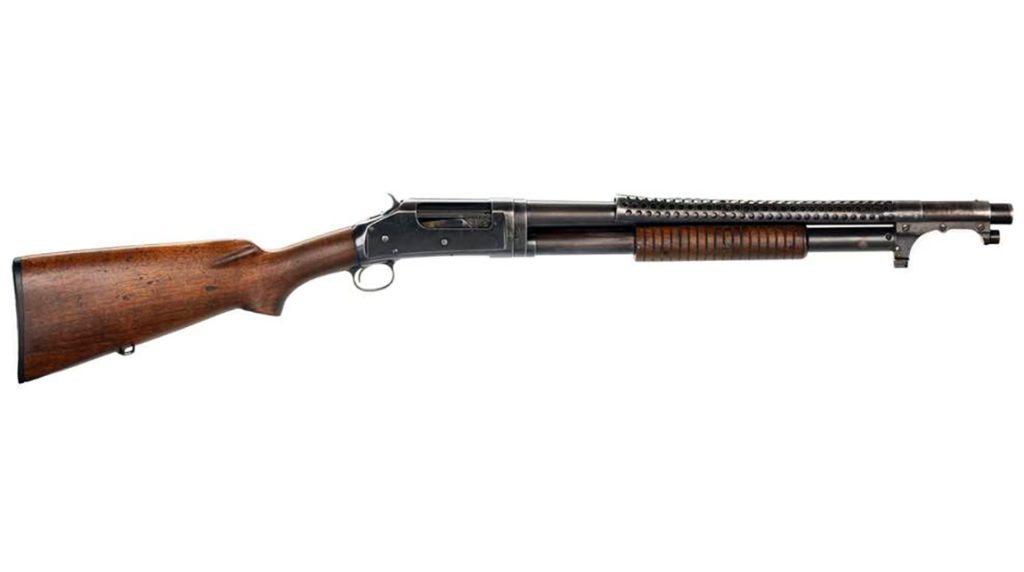
Answer: the combat shotgun.
The concept was born by William G. Eager—literally just a dude managing a lighting company in Georgia—who penned his idea and sent it off to the war department … and that paper somehow made it into the hands of General John J. Pershing, who loved it.
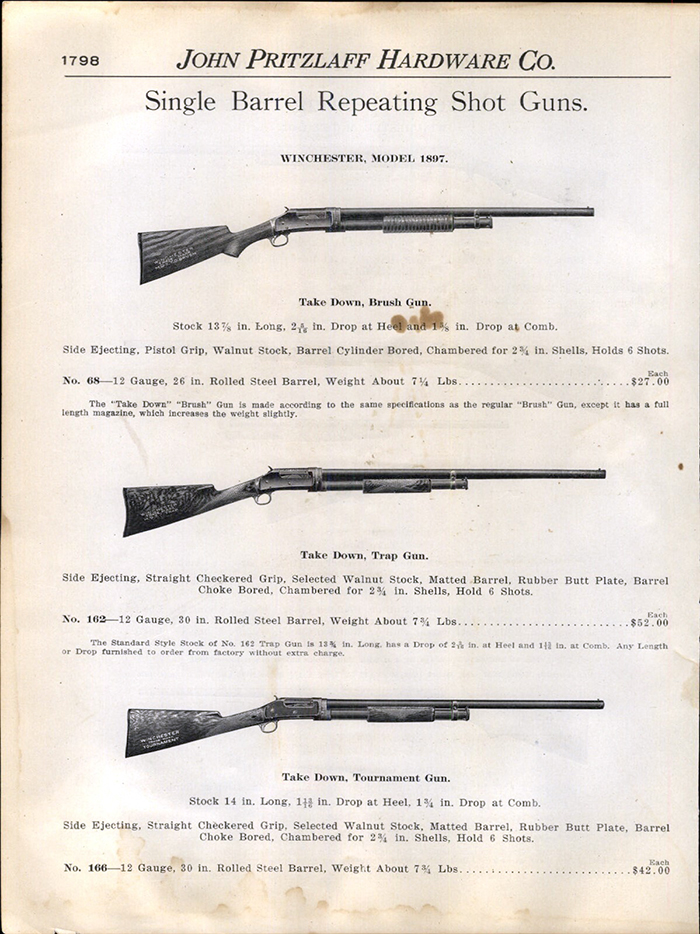
To wit: take a pump-action bird gun and chop the barrel nearly flush with its magazine tube, sprinkle in some 00 buckshot, and add a dash of bayonet. The icing on this cake? The commonly available Winchester 1897 lacked a trigger disconnect, allowing it to “slam fire” a volley of six cartridges as fast as a soldier could pump its arm.
Within six months of Eager floating his report, the Winchester 1897 Trench Gun was drawing German blood.
Though obviously intended for clearing trenches, the 1897 proved its proficiency on the open battlefield, as well.
Imagine a patrol of Germans advancing across a quiet pasture. It would have felt like a weekend stroll compared to the 500-yard-wide No Man’s Lands they were used to storming: artillery-pitted meat-grinders dominated by Browning and Maxim belt-fed machine guns.
Then, in this seemingly peaceful meadow—from under 50 yards—a pair of shotgunners pop out of an unseen trench and let fly with 54 .33-inch pellets each, all within a matter of seconds.
Multiple Germans scream and crumple.
Bolt-actions now erupt while the Winchesters reload.
Confused Germans stumble over their wounded and huddle in groups … which allows the shotgunners to concentrate their next volley: the exposed soldiers fold in clumps of threes and fours with each blast of 00 buckshot.
Nobody knew it at the time, but the Winchester 1897 was serving as the harbinger of a not-so-distant future, where high-powered bolt-actions were about to be dominated by submachine guns.
One week after the United States received Germany’s Hague Convention letter—delivered through the Swiss embassy like a schoolgirl passing notes via her friends—the U.S. Army’s judge advocate Samuel T. Ansell responded that “the chief purpose of employing [this shotgun] in combat is, of course, the highly necessary one of killing or putting out of action at close range as many as possible of the enemy in as short a time as possible,” which in the world of weaponry made the Trench Gun, frankly, nothing special.
Ansell concluded with the assessment that Germany’s Hague complaint “would be ill-founded coming from an enemy whose conduct had evidenced the highest regard for the laws of war; coming from our present enemy, it is destitute of all good faith.”
With that line, the German High Command became laughingstock ’round the globe.
It is a mystery as to how much this public humiliation played into his decision, but mere weeks later, Wilhelm silently abdicated his throne, skulked to an exiled life of luxury in the Netherlands, and left others to finish the war he’d started— perhaps the greatest wuss move in all of history.
The post That Time Germany Wussed Out appeared first on Field Ethos.
Continue reading...
In mid-April of 1918, Germany rained high-explosives and chlorine gas on American troops protecting the French village of Seicheprey … for a solid 36 hours. Then, 3,000 elite Sturmtruppen overwhelmed the American trenches with flamethrowers and stick grenades, forcing the battle into a house-to-house brawl.
Germany’s objective at Seicheprey wasn’t to gain ground, but to embarrass America. Nonetheless, the 102nd Infantry rallied at nightfall and repelled the Sturmtruppen back to their original trench lines, thereby reversing Germany’s humiliation attempt: the Kaiser deployed his very best, and America’s Doughboys sent them packing.
In addition to encountering U.S. grit for the first time, Germany was also introduced to a new American weapon that helped turn the tide at Seicheprey, and beyond. Except … the Germans couldn’t figure out what this Sturmtruppen-defeating armament might be.
The High Command demanded answers! After all, their elites couldn’t possibly be defeated in a fair fight. The enemy must be winning through some unnatural means!
America’s New Weapon
Finally, on July 21st, one of these new weapons was captured, rippling shockwaves through the German hierarchy.
Clutching their pearls at this discovery, the German High Command self-righteously declared to the world that this American weapon was excessively cruel. The United States, they demanded, must immediately cease and desist its use, or Germany would be forced to summarily execute any soldier found in possession of this implement of terror.
To make it official, the German Foreign Office filed the conflict’s first and only Hague Convention complaint … accusing the USA of committing war crimes against Germany.
Remember, Germany started this “War to End All Wars” by introducing the world to hunter-killer submarines sinking civilian ocean liners, along with rampant use of poisonous gas, flame throwers, and anything else that crossed their minds.
Yet, Germany claimed, America had outdone them in the War Crimes Department!
What could this depraved weapon possibly have been?
Answer: the combat shotgun.
Enter the Winchester 1897 Trench Gun
The concept was born by William G. Eager—literally just a dude managing a lighting company in Georgia—who penned his idea and sent it off to the war department … and that paper somehow made it into the hands of General John J. Pershing, who loved it.
To wit: take a pump-action bird gun and chop the barrel nearly flush with its magazine tube, sprinkle in some 00 buckshot, and add a dash of bayonet. The icing on this cake? The commonly available Winchester 1897 lacked a trigger disconnect, allowing it to “slam fire” a volley of six cartridges as fast as a soldier could pump its arm.
Within six months of Eager floating his report, the Winchester 1897 Trench Gun was drawing German blood.
Though obviously intended for clearing trenches, the 1897 proved its proficiency on the open battlefield, as well.
Imagine a patrol of Germans advancing across a quiet pasture. It would have felt like a weekend stroll compared to the 500-yard-wide No Man’s Lands they were used to storming: artillery-pitted meat-grinders dominated by Browning and Maxim belt-fed machine guns.
Then, in this seemingly peaceful meadow—from under 50 yards—a pair of shotgunners pop out of an unseen trench and let fly with 54 .33-inch pellets each, all within a matter of seconds.
Multiple Germans scream and crumple.
Bolt-actions now erupt while the Winchesters reload.
The Trench Gun’s Impact
Confused Germans stumble over their wounded and huddle in groups … which allows the shotgunners to concentrate their next volley: the exposed soldiers fold in clumps of threes and fours with each blast of 00 buckshot.
Nobody knew it at the time, but the Winchester 1897 was serving as the harbinger of a not-so-distant future, where high-powered bolt-actions were about to be dominated by submachine guns.
One week after the United States received Germany’s Hague Convention letter—delivered through the Swiss embassy like a schoolgirl passing notes via her friends—the U.S. Army’s judge advocate Samuel T. Ansell responded that “the chief purpose of employing [this shotgun] in combat is, of course, the highly necessary one of killing or putting out of action at close range as many as possible of the enemy in as short a time as possible,” which in the world of weaponry made the Trench Gun, frankly, nothing special.
Ansell concluded with the assessment that Germany’s Hague complaint “would be ill-founded coming from an enemy whose conduct had evidenced the highest regard for the laws of war; coming from our present enemy, it is destitute of all good faith.”
With that line, the German High Command became laughingstock ’round the globe.
It is a mystery as to how much this public humiliation played into his decision, but mere weeks later, Wilhelm silently abdicated his throne, skulked to an exiled life of luxury in the Netherlands, and left others to finish the war he’d started— perhaps the greatest wuss move in all of history.
The post That Time Germany Wussed Out appeared first on Field Ethos.
Continue reading...
